






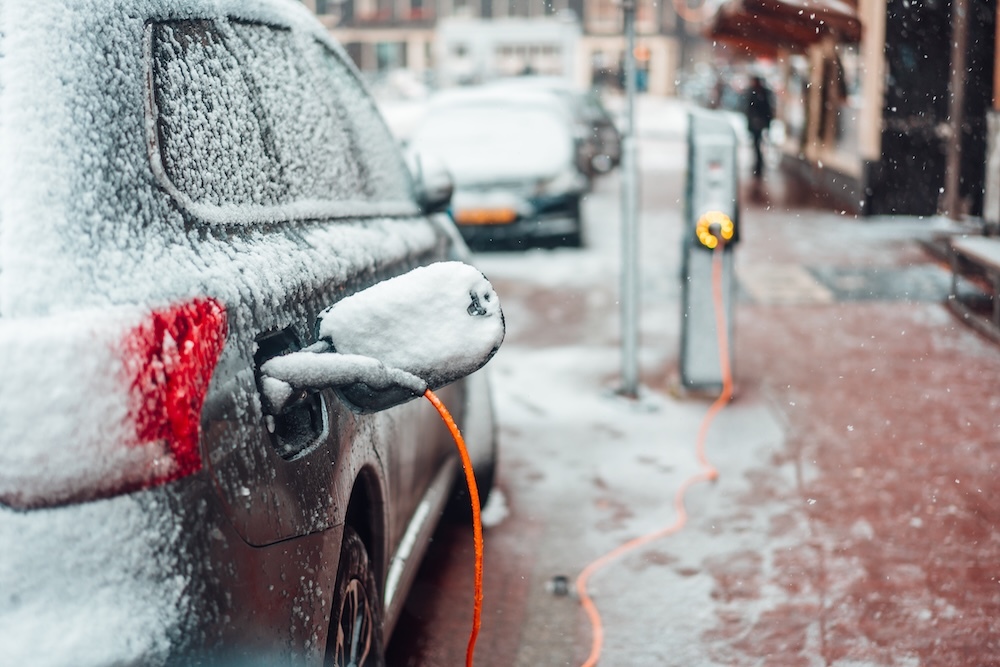
When a winter storm sweeps in, it’s more than just a test of your driving skills — it’s a test of your car’s limits. In 2025, drivers weighing the choice between an electric vehicle (EV) and a hybrid have more to consider than efficiency and emissions. Snow, ice, subzero temperatures, and power outages can quickly expose strengths and weaknesses that rarely appear on sunny days. Both EVs and hybrids can handle winter conditions, but their performance, reliability, and resilience depend heavily on preparation, infrastructure, and the weather itself.
EV performance in the cold
EVs rely entirely on battery power for propulsion, heating, and vehicle systems. Cold weather thickens battery electrolytes, slowing the chemical reactions that release energy. According to the U.S. Department of Energy, EV range can drop by 40% or more in freezing conditions, especially when using cabin heat. Batteries also take longer to charge in the cold, as most modern EVs limit charging rates until the pack warms up.
Still, EVs have winter advantages. The battery pack’s low placement gives them a lower center of gravity, improving stability on icy roads. Instant torque delivery helps in slippery starts, and regenerative braking can aid in controlling speed without locking wheels — though drivers must adjust regen levels to prevent traction loss. Many EVs offer pre-conditioning, allowing the battery and cabin to warm while plugged in, preserving range for driving.
Hybrids in freezing weather
Hybrids, including plug-in hybrids (PHEVs), combine a combustion engine with an electric motor. This means they’re less affected by cold-induced range loss because the engine generates heat for both the cabin and the battery. Even when a hybrid’s electric range shrinks in the cold, the gas engine can compensate.
However, hybrids still rely on high-voltage battery packs for electric assist. In severe cold, these packs experience similar performance dips as EV batteries, though the engine’s waste heat helps keep them in a more optimal range. Hybrids also avoid the long charging times that can affect EVs in frigid temperatures, but they require gas station access — and during major storms, fuel supply disruptions can be just as challenging as power outages.
Energy access during winter outages
In a winter storm, fuel availability is a defining factor. EV drivers with home chargers can avoid venturing out to fill up, as long as the grid remains operational. But if an outage hits and lasts days, charging becomes impossible without backup power — such as a solar-plus-battery system, a generator, or vehicle-to-home (V2H) technology.
Hybrids can refuel at stations equipped with backup generators, which are more common in high-storm regions. However, if supply lines are disrupted or roads are impassable, finding open stations can be a challenge. In extended emergencies, both EV and hybrid owners benefit from planning ahead — topping up before a storm hits and keeping emergency power or fuel reserves on hand.
Grid resilience and charging speed
Charging infrastructure plays a huge role in winter readiness. In urban areas with dense fast-charger networks, EVs can recover range quickly once the battery is warmed. In rural or snowbound regions, charging stations may be far apart — and high-speed chargers can slow dramatically in extreme cold.
Some EV models are better equipped for winter than others. For example, heat pump systems are more efficient for cabin heating than traditional resistive heaters, preserving more driving range. All-wheel-drive (AWD) EVs also provide better traction in deep snow than two-wheel-drive models.
Hybrids don’t face the same charging speed concerns, but they too can be affected if fuel delivery trucks can’t reach stations due to icy roads or blocked highways.
Safety and drivability
Winter driving is about more than keeping the wheels turning — it’s about controlling the vehicle in unpredictable conditions. Both EVs and hybrids benefit from modern stability control systems, but EVs have an edge in traction management thanks to precise torque control to each wheel in AWD configurations. Hybrids rely on mechanical drivetrains for AWD, which may not respond as quickly to sudden loss of traction.
Cabin comfort is another factor. EVs heat up quickly because electric heaters produce warmth immediately, while hybrids take longer as they rely on engine heat. However, running the heater in an EV drains the battery more quickly, reducing range, whereas in hybrids, heating is essentially “free” once the engine is running.
Regional considerations
The choice between EV and hybrid for winter driving varies significantly by location.
- Northern states and provinces: In areas like Minnesota or Alberta, where subzero temperatures last for weeks, hybrids may offer greater resilience during extended cold snaps, especially if power outages are common.
- Milder snowy regions: In places like Oregon or coastal New England, EVs can handle winter with minimal range loss and benefit from shorter outages thanks to more stable grids.
- Mountainous areas: AWD capability matters as much as fuel source here. Both EVs and hybrids can be ordered with AWD, but battery efficiency in high-altitude cold can be a deciding factor.
Human impact
Reliable transportation during winter storms isn’t just about convenience — it’s a lifeline. The National Oceanic and Atmospheric Administration reports that winter storms cause hundreds of deaths and thousands of injuries each year in North America. Many of these are linked to exposure, inability to reach shelter, or delayed emergency response due to blocked or impassable roads.
For residents in rural areas, the choice between EV and hybrid can determine whether they can evacuate or reach supplies when conditions turn dangerous. EVs excel when home charging is available and reliable; hybrids excel when mobility must be maintained regardless of power status.
Climate and long-term trends
Climate change is making winter storms more unpredictable, with sudden shifts from mild weather to dangerous blizzards. NOAA data shows an increase in extreme precipitation events, meaning storms can be wetter and heavier, causing more damage to power infrastructure. This reality puts added pressure on both EV and hybrid owners to plan for outages, not just icy roads.
While EVs remain the cleaner choice over a full lifecycle in most regions, hybrids may be the more practical option in areas with fragile grids until renewable energy storage becomes more widespread.
Preparedness for drivers
Whether you drive an EV or a hybrid, winter storm readiness requires proactive planning.
- For EV owners:
- Keep your battery charged above 70% during storm season.
- Use pre-conditioning while plugged in to warm the cabin and battery.
- Consider installing a home charging system with backup power.
- Reduce speed in extreme cold to extend range.
- For hybrid owners:
- Keep your gas tank at least half full in winter.
- Maintain both the gas engine and battery system.
- Use block heaters in extremely cold regions to ease engine starts.
- Carry extra fuel if traveling in remote areas.
- For all drivers:
- Equip winter tires for better grip on ice and snow.
- Carry an emergency kit with blankets, food, and water.
- Plan routes with available charging or fueling points.
- Avoid unnecessary travel during severe weather warnings.
What can be done
On a policy level, improving winter readiness for EVs and hybrids requires:
- Expanding AWD EV and hybrid offerings.
- Building more cold-weather-capable charging stations with battery preheat tech.
- Encouraging fuel station backup generators in storm-prone areas.
- Investing in grid storage to support renewable energy during outages.
Final Thoughts
Winter storms test more than the powertrain of your vehicle — they test the resilience of your infrastructure, your community, and your preparation. EVs shine in regions with stable power and access to home charging, delivering quiet, clean performance even in the snow. Hybrids offer unmatched flexibility in areas where outages or long distances make charging unreliable. The greenest choice for you may come down not to ideology, but to how well your car and your environment can work together when winter bears its teeth.