



Every object you’ve ever owned — every shirt, phone, chair, and bottle — carries an invisible story.
It began long before you bought it.
And it will continue long after you throw it away.
In the linear economy, we rarely see the full picture. We see only the moment of ownership — the brief middle act in a much longer play.
But behind every product lies a trail of materials, energy, emissions, and labor. Understanding that lifecycle is the first step toward changing it.
The Birth: Extraction and Production
Every product starts with extraction — the mining, logging, farming, or drilling of raw materials.
This stage is the most destructive and energy-intensive.
It accounts for over 50% of global carbon emissions and 90% of biodiversity loss, according to the UN Environment Programme.
- The smartphone in your hand contains metals mined from multiple continents.
- The cotton in your T-shirt required thousands of liters of water.
- The packaging it arrived in likely began as a tree.
Each extraction removes not just resources, but resilience — eroding ecosystems that took millennia to form.
The Hidden Cost of Manufacturing
After extraction comes manufacturing: refinement, assembly, and finishing.
Factories burn fossil fuels for heat and electricity.
Dyes, solvents, and coatings enter air and waterways.
Industrial production now accounts for nearly 30% of total greenhouse gas emissions worldwide.
Even “green” products carry footprints — because energy, water, and labor still feed the process. Sustainability isn’t about perfection; it’s about reducing impact at every stage.
The Life: Distribution, Use, and Maintenance
Once made, a product enters a complex web of transportation and consumption.
Every shipment, warehouse, and delivery adds carbon. The World Economic Forum estimates that global freight accounts for over 8% of total emissions.
Then comes the consumer phase — where use determines a product’s longevity.
A well-cared-for object can serve for years, even decades. But most are discarded far too soon.
Planned obsolescence, fast fashion, and cheap construction shorten lifespans intentionally — ensuring constant replacement and endless profit.
The average smartphone lifespan is now less than three years.
The average fast-fashion item is worn seven to ten times before disposal.
When durability no longer aligns with design, waste becomes inevitable.
The Afterlife: Disposal and Pollution
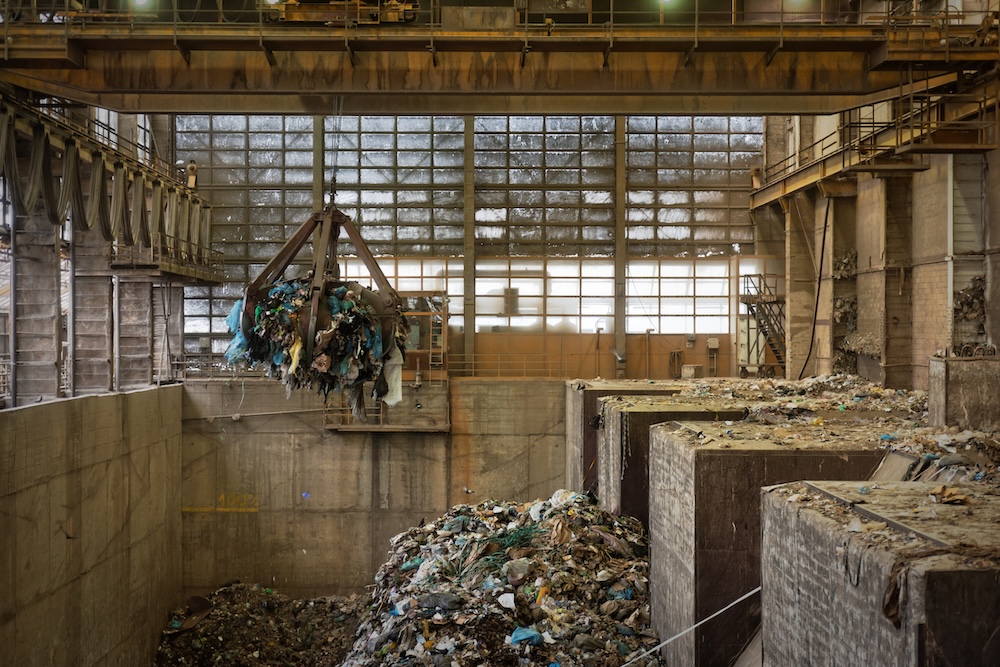
The story doesn’t end at the trash bin. It just moves out of sight.
Globally, humanity produces over 2 billion tons of waste each year, and only about 9% of plastic has ever been recycled (OECD, 2023).
Much of what we discard ends up in landfills, incinerators, or oceans — releasing greenhouse gases and toxic leachates.
Even biodegradable materials often fail to decompose properly in landfill conditions, where oxygen is limited.
This is where the linear lifecycle collapses: “end of life” becomes “end of use.”
The Circular Alternative
The circular economy reimagines this story from start to finish. Instead of take, make, waste, it follows borrow, use, return.
Circular products are designed for longevity, repair, and reuse. Their materials can be safely disassembled, recycled, or composted — returning to the system as nutrients or resources.
This shift reduces waste, conserves energy, and prevents pollution before it begins.
Examples of Circular Design in Practice
- Patagonia repairs and resells worn gear through its Worn Wear program.
- Fairphone designs modular phones that can be repaired at home with simple tools.
- Interface, a global carpet manufacturer, recycles old flooring into new tiles, achieving near-zero waste.
- Natura &Co develops beauty packaging designed for refill and reuse — closing material loops.
Circularity transforms the product lifecycle into a living cycle.
The Role of the Consumer
We are not just buyers; we are participants in every lifecycle.
Each choice we make — to buy, repair, resell, or discard — shapes demand upstream.
Ask yourself:
- How long will this product last?
- What happens when it breaks?
- Where will it go when I’m done with it?
These questions turn awareness into action.
The Future of Product Lifecycles
Emerging innovations are pushing lifecycles toward true sustainability:
- AI and IoT sensors track material flows for efficient recycling.
- Blockchain transparency tools reveal supply chain origins.
- Biodesign integrates living organisms into materials that heal, regrow, or biodegrade naturally.
But for all the technology in the world, the most powerful shift is human — the willingness to see every product as part of an ecosystem.
Final Thoughts
The true lifecycle of a product is more than a supply chain. It’s a moral chain.
Every object we create connects us to land, labor, and legacy. When we forget that connection, design becomes destruction.
But when we remember, design becomes renewal.
Circular thinking isn’t a trend — it’s a return to the rhythm of nature itself: where nothing truly ends, and everything begins again.

