



A bag used for minutes outlives us for centuries. A bottle tossed in the bin will fragment into pieces smaller than dust — but never disappear. Plastic was sold to us as convenience, but what it has really done is cost us life itself.
Every time we accept a plastic wrapper, a disposable fork, or a flimsy toy, we’re making a bargain we don’t realize we’re making. We are trading the health of our oceans, the safety of our food, the dignity of future generations, for a moment of ease.
It’s not just waste. It’s a sacrifice — one we’re forcing onto every form of life on Earth.
The Cost of Convenience
Plastic’s story is simple: use for seconds, persist for centuries.
Every year, the world produces over 400 million metric tons of plastic waste (UNEP, 2023). More than one-third of this is single-use — bags, bottles, wrappers, straws, cutlery — items designed to be used once and thrown away.
These objects serve us for moments, then remain on Earth longer than human history. A plastic bag discarded today could still exist in the year 2500. A soda bottle might float in the ocean long after cities have crumbled.
The convenience is fleeting. The consequences are not.
Who and What Pays the Price?
The costs of this convenience are not abstract. They are visible in the bodies of living beings.
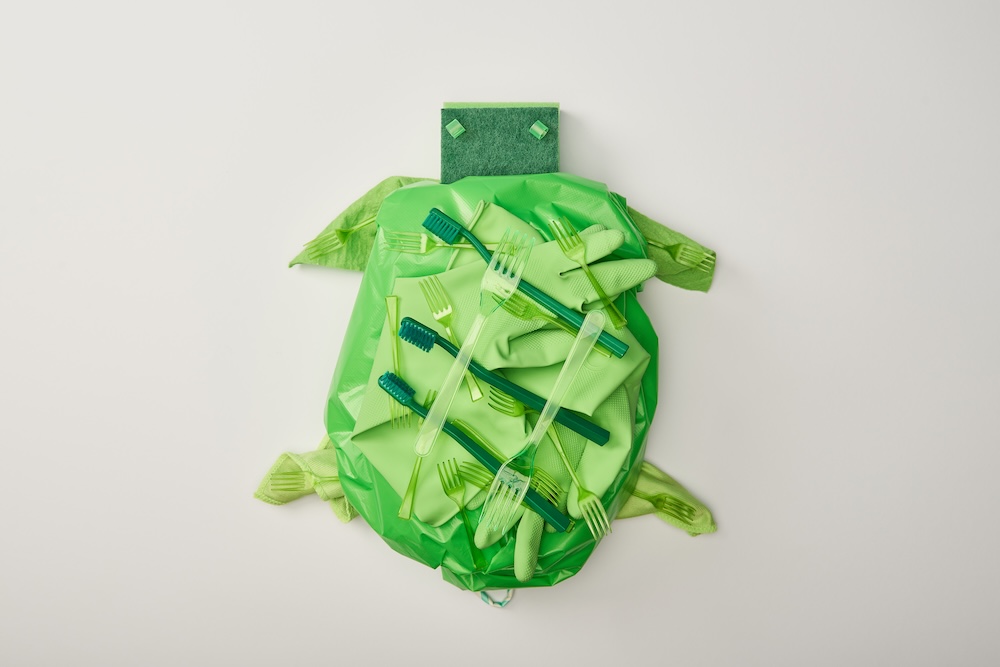
- Oceans: Millions of tons of plastic flow into the seas each year, entangling turtles, suffocating coral reefs, and killing seabirds who starve with stomachs full of plastic shards.
- Wildlife: From elephants eating plastic bags at landfills to plankton absorbing nanoplastics at the base of the food chain, no species is untouched.
- Humans: Microplastics have been detected in drinking water, table salt, seafood, the placenta, and even our bloodstreams. These particles carry toxins that disrupt hormones and compromise immune systems.
- Future generations: Every piece of single-use plastic we create adds to a burden that will outlast our lifetimes. We are bequeathing pollution, not prosperity.
This is the real price tag of disposability. And it is paid not just by us, but by every form of life we share the planet with.
Selling Ourselves Out
It’s not only whales, birds, and distant landscapes that pay the cost of plastic. It’s us. Every day.
- Our children put plastic toys in their mouths — made with chemicals never meant for developing bodies.
- Our pets chew synthetic bones, swallow shreds from plastic squeaky toys, and live with the same toxins that infiltrate our homes.
- We cook with utensils that leach microplastics, store food in containers that degrade over time, drink from bottles that leave invisible fragments in our blood.
When we keep buying these things, it feels like we are selling ourselves out.
We trade health for convenience. We normalize toxins in our homes. We participate in a system that profits from poisoning us.
And the ripple effect runs deeper. Every purchase fuels more extraction, more production, more pollution. Every time we casually accept plastic, we accept a future where safety and dignity are negotiable.
We are not just selling out the planet. We are selling out ourselves, our children, and every generation yet to come.
Fossil Fuels in Disguise
Plastic is not just waste — it is fossil fuel in another form.
As nations transition away from oil for energy, fossil fuel companies are doubling down on petrochemicals. Plastics are their safety net. Projections show plastic production could triple by 2060 (OECD, 2022).
Every disposable bag, cup, and wrapper is part of a larger strategy: to lock us into fossil fuel dependence under the guise of convenience.
That plastic spoon is not harmless. It is a pipeline, disguised in your hand.
Don’t We Deserve Better?
For decades, corporations convinced us that plastic meant progress. A modern miracle. A hygienic, disposable future.
But don’t we deserve better than this?
- Better than a world where whales suffocate on shopping bags.
- Better than a future where our children drink water laced with microplastics.
- Better than communities living in the shadow of petrochemical plants, breathing toxic air while corporations profit.
This isn’t convenience. It’s exploitation. Plastic isn’t serving us — it’s stealing from us.
We deserve durability. We deserve safety. We deserve a world where our lives, and the lives of every other species, are valued more than a throwaway fork.
The Way Out
If plastic is a design failure, the way forward is redesign. Real solutions don’t stop at half-measures like “downcycling” or greenwashed bioplastics. They address the root: single-use itself.
Reuse and Refill
- Glass bottles, metal containers, refill stations.
- Packaging designed to circulate, not discard.
Repair and Share
- Extend product life cycles.
- Tool libraries, swap shops, and rental systems.
Policy and Accountability
- Ban unnecessary single-use plastics.
- Extended Producer Responsibility laws to force corporations to handle the waste they create.
- International treaties to curb production at the source.
True Alternatives
- Compostable packaging verified to degrade without harm.
- Natural fibers and materials that return to ecosystems safely.
This isn’t about going without. It’s about demanding design that values life over disposability.
What You Can Do Today
You don’t have to wait for global agreements to start rejecting single-use plastics. Each action ripples outward:
- Carry a reusable bag, bottle, and utensils.
- Support local refill stations, farmers markets, and zero-waste shops.
- Choose products packaged in glass, aluminum, or compostable fibers.
- Reuse what you already own instead of buying new.
- Say no to unnecessary packaging, even when it feels awkward.
No one can do it perfectly. But every refusal weakens plastic’s grip. Every choice to reuse, refill, or repair is a vote for a different future.
The Ripple Effect of Refusal
When one person says no, it feels small. But when millions refuse, the tide turns.
- Markets shift: businesses adapt to demand.
- Culture shifts: what was once “normal” becomes outdated.
- Policy shifts: leaders act when citizens demand accountability.
Saying no to single-use plastic is not just about waste. It is about life — human life, animal life, ocean life. And refusing to sacrifice that life for convenience is one of the most powerful acts we can take.
FAQs
Why is single-use plastic so harmful?
Because it combines the worst traits: it lasts for centuries, yet is designed to be discarded after minutes of use. That mismatch is catastrophic for ecosystems and health.
Can’t we just recycle more effectively?
Even in the best systems, most plastics are not recyclable. They’re too contaminated, too mixed, or too low-value. Recycling cannot keep pace with ever-increasing production.
Are paper or bioplastics better alternatives?
Sometimes. Paper and compostable fibers can work if sourced responsibly and composted properly. Many bioplastics, however, still degrade into microplastics or require industrial facilities that don’t exist in most places.
Do small individual actions matter?
Yes. Alone, they may feel small. Together, they build cultural and economic momentum that shifts industries and policies. Small ripples combine into waves of change.
Final Thoughts
Single-use plastics are the clearest symbol of short-term thinking: seconds of convenience, centuries of destruction.
But the truth is starker. Every disposable item we accept is part of a larger bargain — one that trades the future of all life on Earth for the profits of today.
We are not just sacrificing animals, oceans, or distant ecosystems. We are sacrificing ourselves, our children, and the dignity of life itself.
It doesn’t have to be this way. We can stop selling ourselves out. We can demand better design, better policy, and better respect for the life we share this planet with.
The question is simple: will we keep trading life for plastic — or will we finally say enough?