






Decluttering doesn’t have to mean waste. For too long, “tidying up” has been synonymous with tossing out — closets cleared, drawers emptied, garages purged. But true sustainability asks us to go deeper. Instead of discarding and replacing, we can use circular systems that keep items in play longer, reduce waste, and reimagine what it means to have a well-kept home.
Why Decluttering Needs a Rethink
Conventional decluttering advice often skips over the consequences. Items are sent to landfills, donation bins, or recycling systems that can’t keep pace with the flood of material. According to the EPA, Americans generate over 146 million tons of municipal solid waste annually, with plastics and textiles among the fastest-growing streams.
Decluttering should not mean outsourcing guilt. It should mean designing a system where our belongings continue to serve a purpose — whether in our homes, in our communities, or in new forms.
Circular Solutions at Home
Circular systems shift focus from “throw away” to “keep in circulation.” Some practical ways to apply this at home include:
- Repair and maintain: Fixing a broken zipper, tightening a wobbly chair, or replacing a small appliance part prevents unnecessary replacement.
- Repurpose creatively: A glass jar becomes storage, an old T-shirt becomes a cleaning cloth, worn towels can serve as pet bedding.
- Borrow or rent: Instead of owning rarely used items like power tools or party supplies, consider borrowing from neighbors or renting from community libraries of things.
- Buy durable, not disposable: Invest in quality goods built to last — from stainless steel water bottles to responsibly made furniture.
Community Swaps and Sharing
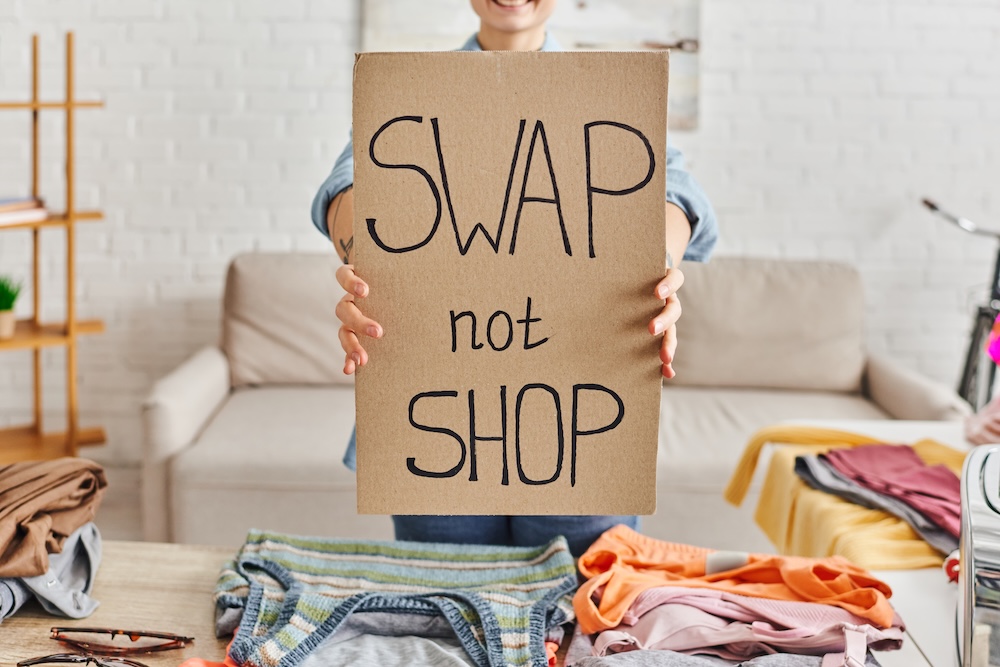
Community swaps are one of the most powerful forms of circular systems. Clothing swaps, toy libraries, tool exchanges, and local swap shops extend the life of items while reducing demand for new production. They also build community connections that strengthen social resilience.
Globally, these models are taking hold:
- In the UK, “Library of Things” spaces let residents borrow items affordably.
- Across the U.S., Buy Nothing groups encourage sharing goods with neighbors.
- In Ghana and Kenya, repair cafés and second-hand hubs are reframing the value of “used” as resourceful, not shameful.
By normalizing these practices, we disrupt convenience culture and start building a society where resources circulate instead of pile up.
Durable Design and the Future of Decluttering
The deepest layer of circular systems is durable design. Products built to last — and built to be repaired — reduce waste before it starts. From modular electronics to compostable packaging, design choices influence whether future “decluttering” becomes a waste crisis or a closed loop.
When designers prioritize longevity and consumers demand durability, decluttering no longer has to mean disposal. Instead, it means caring for things in ways that respect both home and planet.
FAQs
Is decluttering always wasteful?
Not if done responsibly. The issue arises when decluttering is paired with over-consumption — tossing things out only to replace them with new purchases.
What are circular systems in plain terms?
Circular systems keep resources in use for as long as possible through reuse, repair, sharing, and recycling. They contrast with the linear “take–make–waste” model.
How do swaps really help?
Swaps keep goods circulating within communities, cutting demand for new production and reducing environmental impact. They also make decluttering less about waste and more about redistribution.
Why not just recycle instead?
Recycling is important but limited. Many materials can’t be recycled infinitely, and systems are often overwhelmed. Reuse and repair keep materials in play longer and at higher value.
How can I start applying this at home?
Begin small: host a swap with friends, repair one broken item, or buy durable replacements instead of disposable ones. These small actions ripple outward.
Final Thoughts
Decluttering can either reinforce disposable culture or disrupt it. When framed within circular systems, it becomes a chance to value what we own, extend its life, and build stronger connections with community. From swaps to durable design, the solutions are already here — and they start with choosing circulation over disposal.

