




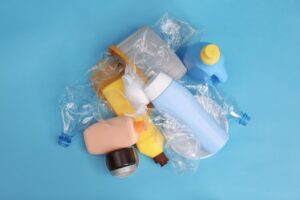
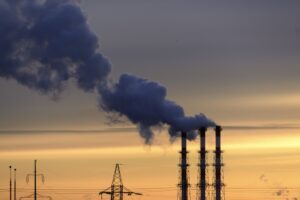
When people think about pollution, they often picture smokestacks, oil spills, or plastic bottles washed up on beaches. What’s less visible — but far more impactful — is how global supply chains drive pollution at every stage. From resource extraction to manufacturing, shipping, packaging, and waste, the path products take from factory to shelf contributes massively to air pollution, water contamination, and climate change.
Understanding this hidden footprint is critical. Without addressing supply chains, no sustainability effort can succeed.
What Are Supply Chains?
A supply chain is the entire network that brings a product to life:
- Extracting raw materials
- Manufacturing and assembly
- Packaging and distribution
- Shipping and logistics
- Retail and consumption
- Disposal or recycling
Each link in this chain leaves an environmental trace — often in places far removed from where the product is sold.
The Carbon Cost of Supply Chains
- According to the CDP (Carbon Disclosure Project), supply chains produce over 5.5 times more emissions on average than a company’s direct operations.
- Global freight alone accounts for nearly 8% of global greenhouse gas emissions.
- By 2050, shipping and logistics emissions are projected to rise by over 50% unless major changes occur.
From trucks to cargo ships to air freight, moving goods is one of the world’s largest hidden drivers of climate pollution.
Air Pollution from Manufacturing
Supply chains begin in factories. Many of these facilities run on coal, oil, or natural gas, and their emissions go far beyond CO₂.
- Particulate matter (PM2.5): Causes respiratory illness and contributes to millions of premature deaths each year.
- Nitrogen oxides (NOx) and sulfur dioxide (SO₂): Fuel smog and acid rain.
- Volatile organic compounds (VOCs): Released during chemical processing, they harm both workers and surrounding communities.
In regions where manufacturing is clustered, like South Asia and Southeast Asia, communities often bear the brunt of toxic air pollution tied directly to global consumption.
Water Pollution and Waste
Supply chains also drain and pollute freshwater systems.
- Textiles: Dyeing and finishing fabrics use chemicals that are discharged into rivers, contaminating water supplies.
- Agriculture: Fertilizers and pesticides run off into waterways, creating algal blooms and dead zones.
- Mining: Extracting metals for electronics often leads to toxic heavy metal runoff, poisoning groundwater and rivers.
The Ellen MacArthur Foundation estimates that the textile industry alone contributes to 20% of global wastewater pollution.
Plastic Packaging
Supply chains rely heavily on packaging to protect and transport goods.
- Over 141 million metric tons of plastic packaging are produced each year.
- Most is single-use, designed for disposal rather than reuse.
- Less than 9% of plastic ever produced has been recycled.
This packaging often ends up in landfills, incinerators, or directly in oceans — contributing to both greenhouse gas emissions and microplastic contamination.
Deforestation and Land Use
The demand for raw materials often drives deforestation.
- Palm oil: Used in food and cosmetics, linked to deforestation in Indonesia and Malaysia.
- Beef and soy: Supply chains linked to cattle ranching and soy production drive deforestation in the Amazon.
- Timber and pulp: Illegal logging fuels deforestation while feeding global demand for paper and wood products.
Deforestation doesn’t just release carbon. It destroys biodiversity, displaces Indigenous communities, and weakens the Earth’s natural resilience.
The Global Inequality of Supply Chain Pollution
A striking fact: much of the pollution created by supply chains is exported.
- Products consumed in wealthier nations often leave behind environmental destruction in poorer producer countries.
- Communities in the Global South face air and water contamination, unsafe working conditions, and biodiversity loss, while consumers in the Global North benefit from cheap goods.
- This inequality highlights the need for accountability and shared responsibility.
Circular Economy Solutions
Shifting supply chains toward circular economy principles can dramatically reduce pollution.
- Design for reuse: Products and packaging built to last multiple cycles.
- Closed-loop recycling: Materials recovered at end of life and fed back into new production.
- Shorter, localized supply chains: Reduce transport emissions and strengthen community resilience.
- Sustainable sourcing: Verified raw materials that don’t rely on deforestation or toxic processes.
These changes require both systemic reform and consumer demand.
What Governments and Companies Are Doing
- Extended Producer Responsibility (EPR) laws: Require companies to take back or recycle products at end-of-life.
- Carbon disclosure frameworks: Push companies to report supply chain emissions (Scope 3) in addition to direct operations.
- Green shipping initiatives: Investment in cleaner fuels and more efficient vessels.
- Certification schemes: Fairtrade, FSC (Forestry Stewardship Council), and Rainforest Alliance certifications encourage better sourcing.
Progress is happening, but far too slowly given the scale of supply chain-driven pollution.
What You Can Do
- Ask questions: Choose brands transparent about sourcing and sustainability.
- Reduce consumption: Buying less is the most direct way to shrink your personal supply chain footprint.
- Choose reused and recycled products: Support companies adopting circular economy models.
- Push for policy: Advocate for stronger laws on producer responsibility and supply chain transparency.
- Consider shipping impact: Avoid overnight or air shipping when possible, as it has the highest emissions.
Even small shifts in consumer demand can influence how supply chains are structured.
FAQs
Why are supply chain emissions called “Scope 3”?
Emissions are classified as Scope 1 (direct), Scope 2 (purchased energy), and Scope 3 (indirect, including supply chains). Scope 3 is often the largest but hardest to track.
Is local always better?
Not always, but shorter supply chains generally mean lower emissions. However, production practices also matter — a sustainably grown imported product can sometimes be better than a local but resource-intensive one.
Which industries have the dirtiest supply chains?
Textiles, agriculture, shipping, electronics, and plastics are among the biggest drivers of pollution.
Can supply chains ever be “clean”?
Not entirely, but they can be designed to minimize harm through circularity, renewable energy, and ethical sourcing.
Final Thoughts
Pollution isn’t just a local problem. It’s embedded in the products we use every day, hidden in global supply chains that stretch across continents. The path from factory to shelf shapes air quality, water safety, climate stability, and community health worldwide.
The good news is that supply chains can change. By designing them for circularity, transparency, and fairness, we can transform them from engines of pollution into systems of resilience. The challenge is global, but so is the opportunity.