


The world is full of noise about how humans will “fix” the planet — carbon markets, technologies, and strategies to restore balance.
But here’s the truth we often forget: the Earth already knows how to heal.
When we step back and give nature space, it begins to regenerate — not slowly, but with astonishing speed and precision.
Forests regrow. Coral rebuilds. Rivers cleanse. The blueprint for healing has always existed; we just keep interrupting it.
The Science of Natural Regeneration
Every ecosystem has built-in feedback loops — natural recovery processes that maintain balance after disturbance.
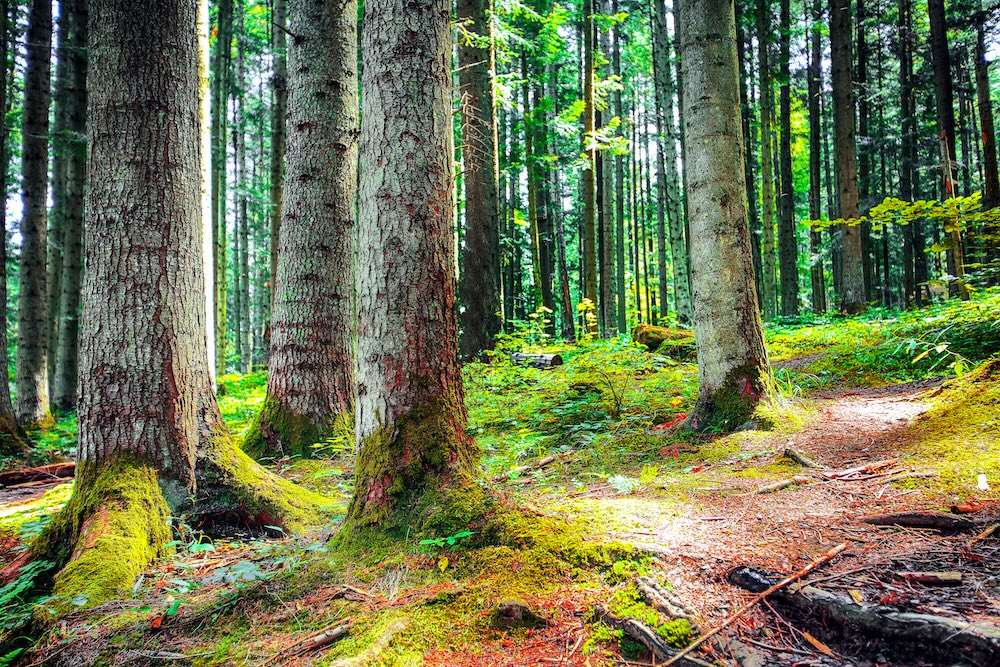
- Forests regenerate through seed dispersal, nutrient cycling, and succession — the gradual return of plant and animal diversity.
- Wetlands filter water through vegetation and microbial life, breaking down toxins without human intervention.
- Oceans absorb and process organic waste through plankton, currents, and natural bacterial decomposition.
These aren’t miracles. They’re biology in motion — ancient systems of renewal honed over billions of years.
When humans step back, those systems reactivate.
Real-World Proof: When Nature Is Given a Chance
- Chernobyl, Ukraine: After the 1986 nuclear disaster, humans fled. Decades later, wildlife returned — wolves, deer, even lynx — thriving in the absence of human interference.
- Marine Protected Areas: Studies show coral reefs inside no-fishing zones recover faster, with fish populations rebounding up to 600% within a decade.
- Costa Rica: Once deforested, the country implemented strong conservation laws. Today, over half of its land is covered in forest again, and biodiversity is surging.
- Yellowstone, USA: When wolves were reintroduced, they rebalanced deer populations, which allowed vegetation to regrow and rivers to stabilize — a textbook example of ecosystem self-healing.
The pattern is clear: once pressure stops, balance returns.
Why Nature’s Healing Matters Now
We’re living through an era of planetary exhaustion — forests stripped, oceans overfished, and air filled with what nature can no longer absorb.
But the solution doesn’t always require invention — sometimes it requires permission.
Letting natural systems regenerate can do more for climate, biodiversity, and stability than most artificial interventions ever could.
- Forests left alone become carbon sinks again.
- Rivers freed from dams cleanse themselves and restore fisheries.
- Mangroves regrow, protecting coasts from storms and erosion.
Regeneration isn’t passive. It’s the planet’s most powerful form of action.
The Human Role: From Control to Cooperation
We’ve been taught that nature needs managing — that we must control it to keep it alive.
But our real role isn’t control; it’s coexistence.
That means:
- Rewilding — allowing nature to reclaim spaces that were once hers.
- Restoring corridors — connecting fragmented habitats so species can migrate and adapt.
- Protecting silence — reducing noise, pollution, and extraction long enough for ecosystems to re-establish their own rhythms.
True restoration begins not with tools, but with restraint.
A New Measure of Progress
In nature, growth doesn’t mean expansion — it means returning to equilibrium.
If a forest regrows, if a river clears, if soil breathes again, that’s success. Progress should be measured by how much life comes back, not how much we can extract.
When ecosystems heal, everything downstream — literally and figuratively — heals too: air, water, soil, and spirit.
Final Thoughts
The planet’s resilience is not a distant hope — it’s a daily reality waiting for space to unfold.
We don’t have to reinvent balance. We only need to stop interrupting it.
Because the Earth has never forgotten how to heal — we have.
And when we remember, we become part of that healing too.