







Nike is one of the world’s leading sportswear brands, known for its innovative designs and high-performance products. However, the company is also committed to reducing its environmental impact and has set an ambitious goal to achieve zero carbon and zero waste by 2050 through its Move to Zero initiative. In this blog post, we’ll explore Nike’s sustainability efforts, including its commitment to sustainable materials, renewable energy, carbon reduction, and waste elimination.
Nike’s Sustainable Materials
One of the key pillars of Nike’s sustainability strategy is using sustainable materials in its products. In its manufacturing processes, Nike has introduced a range of more responsible materials, including recycled polyester made from plastic bottles, organic cotton, and water-based solvents.
In addition, Nike has launched product lines that showcase innovation through sustainability, such as:
- Flyleather — made from recycled leather scraps and synthetic fibers, Flyleather delivers a material that looks and feels like premium leather but uses 90% less water and has an 80% lower carbon footprint than traditional leather.
- Space Hippie — a footwear collection crafted from recycled materials, including plastic bottles, t-shirts, and yarn scraps. Inspired by the resource scarcity of life on Mars, the line demonstrates how limited resources can drive creativity.
Nike has also expanded sustainable innovations beyond these lines, including Nike Forward (a low-carbon material platform) and recycled Air soles. These initiatives reflect Nike’s belief that design can drive both performance and sustainability.
Nike’s Carbon Reduction Efforts
Nike’s Move to Zero strategy includes a goal of reaching zero carbon emissions by 2050. To get there, Nike has set near-term, science-based targets:
- A 65% reduction in Scope 1 and 2 emissions (its own operations) by 2030.
- A 30% reduction in Scope 3 emissions (its supply chain) by 2030, compared to a 2015 baseline.
To meet these goals, Nike is taking a multi-pronged approach:
- Renewable energy: Nike has committed to powering 100% of its owned or operated facilities with renewable energy by 2025. This does not yet cover its vast supply chain, but Nike is working with suppliers to encourage renewable adoption.
- Energy efficiency: The company is reducing consumption with energy-saving measures like LED lighting, optimized heating/cooling systems, and smarter logistics.
- Transportation optimization: Nike is streamlining its shipping network to reduce emissions from transport and is testing alternative fuels and electric vehicle options.
By combining these efforts, Nike reduces its footprint while also contributing to the broader growth of renewable energy and low-carbon logistics.
Nike’s Waste Reduction Efforts
Nike is committed to eliminating waste, with a specific goal of zero waste to landfill from its owned or operated facilities by 2025. Its approach combines innovation with large-scale recycling efforts:
- Nike Grind — an initiative that recycles old athletic shoes and surplus materials into new products such as sports surfaces, gym flooring, and apparel components. This program has already diverted millions of pounds of waste from landfills.
- Manufacturing waste diversion — Nike reports that over 99% of footwear manufacturing waste is diverted from landfills, with significant amounts recycled back into products.
- Single-use plastics — Nike has pledged to eliminate single-use plastics from its offices, retail stores, and warehouses by 2025, replacing them with reusable or recyclable alternatives.
Final Thoughts
Nike’s sustainability efforts are an important part of the company’s mission to protect the future of sport and the planet. While challenges remain—especially across its supply chain—Nike’s Move to Zero framework sets clear targets and demonstrates how innovation can reduce impact. By investing in sustainable materials, renewable energy, and waste reduction, Nike is positioning itself as a leader in sustainable business practices.
As consumers, we can support these efforts by choosing eco-friendly products, holding companies accountable, and making small shifts in our own lives. Every choice—whether it’s reusing, repairing, or choosing lower-impact products—creates ripples that grow into waves of change.
Related:
Reducing Footwear’s Environmental Impact: Strategies and Tools for Sustainability
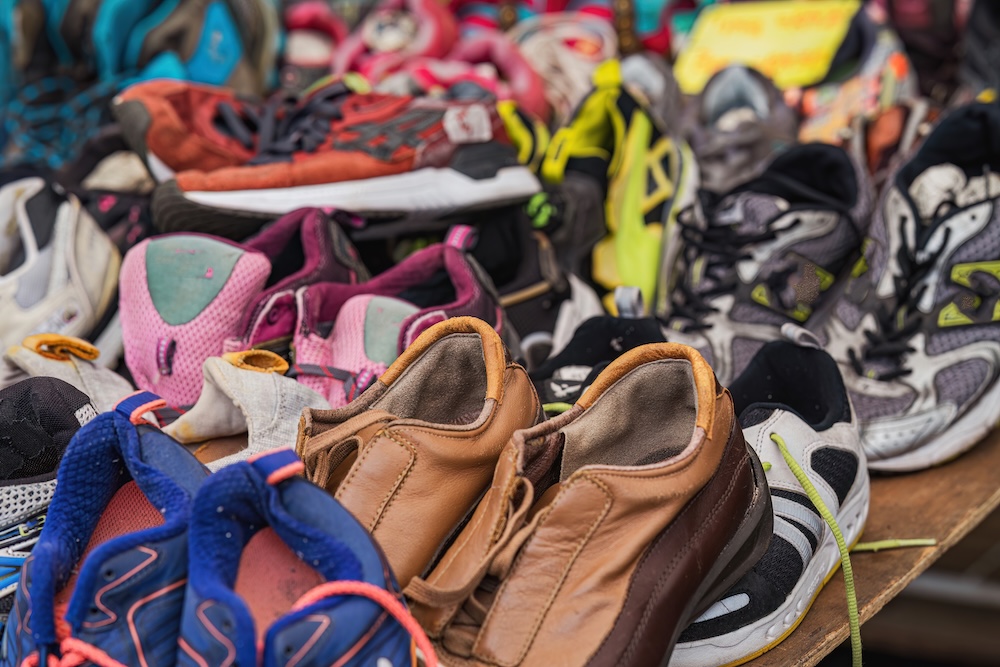
The footwear industry produces billions of pairs of shoes every year. Behind every pair lies a long chain of impacts — from the extraction of raw materials, to the energy-intensive processes of manufacturing, to the piles of discarded shoes at end of life. As consumers demand more transparency and sustainability, footwear companies are under growing pressure to shrink their environmental footprint and operate responsibly.
In our recent look at Nike’s Move to Zero initiative, we explored how one global leader is tackling carbon and waste. But Nike is not alone — across the industry, other footwear brands are experimenting with new strategies and tools to tread lighter. This article explores the methods footwear companies can use to reduce their impact, along with examples of who is leading the way.
Measuring the Impact of Footwear Companies
Sustainability starts with measurement. Companies cannot reduce what they do not measure. Several established frameworks help footwear companies identify environmental hot spots across their supply chain:
Life Cycle Assessment (LCA)
An LCA examines a product’s impact from cradle to grave — raw material extraction, manufacturing, distribution, use, and disposal. For footwear, LCAs reveal how material choices (like leather vs. recycled polyester) and processes (like dyeing or gluing) drive emissions, water usage, and waste.
Global Reporting Initiative (GRI)
The GRI framework allows companies to report on their sustainability performance across environmental, social, and governance indicators. By adopting GRI, footwear companies can benchmark against peers, highlight progress, and identify areas for improvement.
Higg Index
Widely used in apparel and footwear, the Higg Index (developed by the Sustainable Apparel Coalition) helps brands measure the impact of materials, production facilities, and even packaging. It’s a practical tool for guiding sourcing decisions and reducing hidden impacts in supply chains.
Science Based Targets initiative (SBTi)
Carbon measurement must also be tied to clear goals. Through the SBTi, footwear companies commit to targets aligned with climate science, ensuring reductions are real and measurable.
Together, these tools form the backbone of responsible strategy: identify where the biggest impacts occur, then set targets and track progress.
Strategies for Reducing Environmental Impact
Once impacts are measured, footwear companies can move to action. The most effective strategies fall into several categories:
1. Sustainable Materials
Materials represent the single biggest lever for reducing impact. Shifting away from virgin, resource-intensive inputs can cut carbon, water, and waste dramatically.
Examples include:
- Recycled polyester from plastic bottles.
- Organic cotton grown without toxic pesticides.
- Plant-based leathers made from mycelium, pineapple leaves, or cactus.
- Recycled rubber for midsoles and outsoles.
Every material choice ripples outward: when one company shifts to low-impact inputs, suppliers adapt, industries evolve, and consumers begin to expect better options.
2. Resource Efficiency
Improving how factories use water, energy, and raw materials can create immediate savings. Examples include:
- Closed-loop water systems that recycle dye baths.
- Renewable energy installations at manufacturing sites.
- Precision cutting and digital design to reduce offcuts.
Nike, Adidas, and others have shown that factory efficiency upgrades often reduce costs as well as emissions, proving sustainability is not just an expense but an investment.
3. Waste Reduction and Circular Economy
Shoes are notoriously difficult to recycle because they combine leather, rubber, foam, and glue. To tackle this, footwear companies are adopting circular strategies:
- Take-back programs that collect old shoes for recycling.
- Material recycling programs like Nike Grind, which repurposes old shoes into sports surfaces.
- Design for disassembly, making products easier to break down and recycle.
- Repair and refurbishment services to extend product life.
These efforts shift footwear from a linear “take, make, waste” model toward a circular economy where materials are reused, not discarded.
4. Sustainable Supply Chain Management
Most of a shoe’s carbon footprint occurs in the supply chain. Companies can:
- Source from suppliers who run on renewable energy.
- Audit and support suppliers to meet environmental standards.
- Prioritize regional suppliers to reduce transport emissions.
Transparency is key: showing consumers where and how materials are sourced builds trust and drives accountability.
5. Carbon Offsetting
Offsets are not a replacement for reductions, but they can play a role in the transition. By investing in renewable energy projects, reforestation, or verified carbon removal, footwear companies can balance unavoidable emissions while working toward deeper systemic changes.
6. Sustainable Product Design
Design determines a shoe’s longevity and footprint. Strategies include:
- Durability — making shoes that last longer.
- Modularity — designing shoes so individual parts (outsoles, insoles, laces) can be replaced.
- Recyclability — choosing glues, fabrics, and stitching methods that make disassembly possible.
By designing with the end in mind, footwear companies extend product life and reduce landfill waste.
Case Studies: Who’s Leading the Way?
While Nike has made headlines with Flyleather, Space Hippie, and its Move to Zero goals, other brands are charting new paths:
Allbirds
- Uses merino wool, eucalyptus fibers, and recycled polyester in its footwear.
- Became the first footwear brand to label each product with its carbon footprint.
- Is a certified B Corporation and offsets all remaining emissions.
Veja
- Pioneers the use of wild rubber sourced from the Amazon, helping prevent deforestation.
- Uses organic cotton and recycled materials.
- Runs a transparent supply chain model, publishing detailed sourcing and labor information.
Patagonia
- Known for outdoor apparel, but also produces footwear.
- Uses hemp, recycled polyester, and other low-impact fibers.
- Operates the Worn Wear program, repairing and reselling millions of products to extend lifespan.
These companies show that sustainability is not only possible but can become a brand differentiator — winning consumer trust and loyalty.
Final Thoughts
Reducing the environmental impact of footwear companies is complex, but it is not optional. From materials and design to supply chain and waste, every step offers opportunities for improvement. And as seen with Nike, Allbirds, Veja, and Patagonia, sustainability can spark innovation, loyalty, and industry transformation.
The ripple effect is clear: one company’s shift to recycled materials can influence suppliers, inspire competitors, and shape consumer habits. Each decision — whether sourcing organic cotton, repairing instead of discarding, or investing in renewable energy — contributes to waves of change across the industry.
For consumers, the path forward is simple: support companies walking the talk. Every purchase signals demand for better practices, pushing the industry further toward a sustainable future.