




The Feel-Good Lie of the Upcycled Bottle
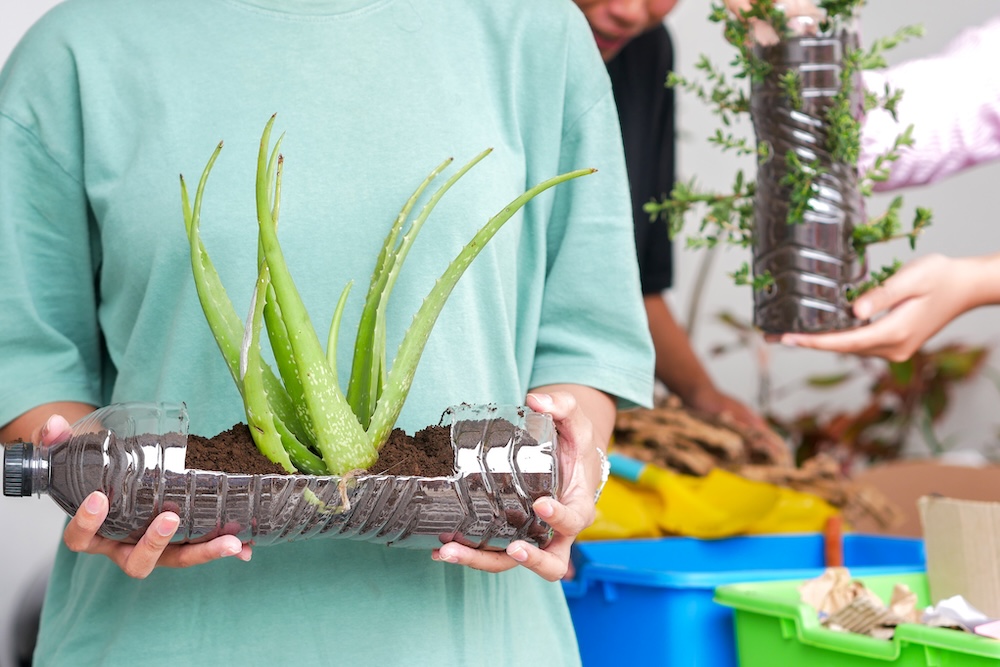
You cut the bottle just right. Filled it with soil. Slipped in a sprig of aloe or a basil seedling. It looks charming — maybe even a little genius. Repurposing trash into something useful.
You tell yourself: “At least I didn’t throw it away.”
But what if that well-intentioned act is doing more harm than you think?
Here’s the uncomfortable truth:
You might be growing microplastics along with your plants.
Plastic Doesn’t Stay Plastic — It Breaks Down
Reused plastic bottles may look solid and stable, but under the surface, they’re quietly unraveling.
Most bottles are made of PET (polyethylene terephthalate) or PVC, which begin degrading when exposed to:
- Sunlight (UV rays)
- Water
- Heat
- Friction or scratches
This degradation doesn’t melt them away — it shreds them into microplastics (particles under 5 mm) and nanoplastics (less than 100 nanometers). These invisible bits can shed right into the soil you’re using to grow food or herbs.
Even worse? These plastics can leach chemicals like BPA, phthalates, and flame retardants — endocrine disruptors linked to a range of health and hormonal issues in both humans and animals.
What Happens to the Soil?
Soil is alive. It breathes. It holds networks of microbes, fungi, worms, and root systems — all of which interact with plastic when it’s introduced.
Once microplastics enter the soil:
- They can disrupt microbial communities, damaging soil fertility
- Reduce water retention and change the soil structure
- Leach harmful chemicals that stay in the ground
- Become available for root uptake — meaning plants can absorb them
It’s a slow, quiet form of pollution that feels harmless because it’s invisible.
Yes, Your Plants Can Absorb Plastic
This isn’t fearmongering. It’s happening — and we have the science to prove it.
A 2020 study from Wageningen University in the Netherlands confirmed that nanoplastics can be absorbed by the roots of common vegetables like lettuce and wheat. These particles travel up through the xylem, the plant’s water transport system, and into the edible parts.
In a separate study from the Chinese Academy of Sciences, researchers found microplastic particles in rice plants grown in contaminated paddies.
In other words:
If you grow herbs in a plastic bottle that’s degrading in the sun, it’s entirely possible you’re harvesting plants infused with plastic.
“Eco-Friendly” Isn’t Always Friendly to Nature
Let’s zoom out for a second.
We’re told to reduce, reuse, recycle. So many of us are doing our best — and reusing plastic feels right. It feels responsible. But plastic was never meant to be part of nature. It was designed to outlast it.
So when we use it to grow food, we’re:
- Extending the lifespan of pollution
- Introducing it into living ecosystems
- Giving ourselves the illusion of sustainability — while our plants pay the price
And worse, we’re making soil contamination look cute.
Other “Sustainable” Habits That May Be Harming Your Garden
It’s not just bottle planters. Other common practices can quietly introduce plastic into your growing space:
- Using takeout containers or single-use cups as seed starters
- Growing in buckets or tubs not designed for gardening (especially soft plastics)
- Lining beds with plastic bags or tarps
- Composting in plastic bins that break down over time
- Using synthetic gardening gloves or tools that shed microfibers
Each one seems small. But small habits scale — and soil remembers everything.
Better Alternatives for Conscious Growing
You don’t have to stop being resourceful. You just need to be informed.
Here are safer ways to grow without contaminating your soil:
- 🌿 Biodegradable pots made from rice hulls, coconut coir, or peat
- 🪴 Terracotta, unglazed ceramic, or metal containers
- 🥄 Glass jars or food-grade stainless steel for windowsill herbs
- 🧺 Upcycled wooden boxes or bamboo baskets
- ♻️ Compostable seed trays (no plastic coating)
If you must reuse plastic short-term:
- Avoid direct sunlight exposure
- Don’t reuse cracked, old, or faded plastic
- Use it indoors and retire it early
The key isn’t to fear plastic. It’s to stop pretending it belongs in ecosystems.
Final Thoughts
We’ve been trained to think that reusing plastic equals progress. That turning trash into planters is noble. That saving a bottle from the landfill is a win.
But plastic doesn’t become harmless just because you gave it a new job. It still sheds. Still leaches. Still outlives us.
And when we place it at the root of something meant to nourish us — like a plant — we invite it into our food, our bodies, and our future.
You’re not just growing basil in that bottle.
You might be growing microplastics.