





Winter ice is not a lifestyle choice. Sometimes it’s dangerous, and you need traction or melt power immediately.
But “sometimes you have to use salt” is not the same as “salt everywhere, every time.”
Salt is powerful because it works fast in the right conditions. It’s also powerful because it doesn’t disappear. Chloride moves with meltwater into storm drains, soils, streams, and groundwater, and it can accumulate over seasons in places that don’t flush quickly.
This post is about keeping people safe without turning winter maintenance into quiet, permanent pollution.
What Salt Actually Does (and Why People Overuse It)
Salt works because it lowers the freezing point of water and helps break the bond between ice and pavement. The problem is not “salt exists.” The problem is how easily “a little” becomes routine over-application:
- people salt before shoveling
- people salt during active snowfall (when salt gets buried)
- people salt when it’s too cold for it to work well
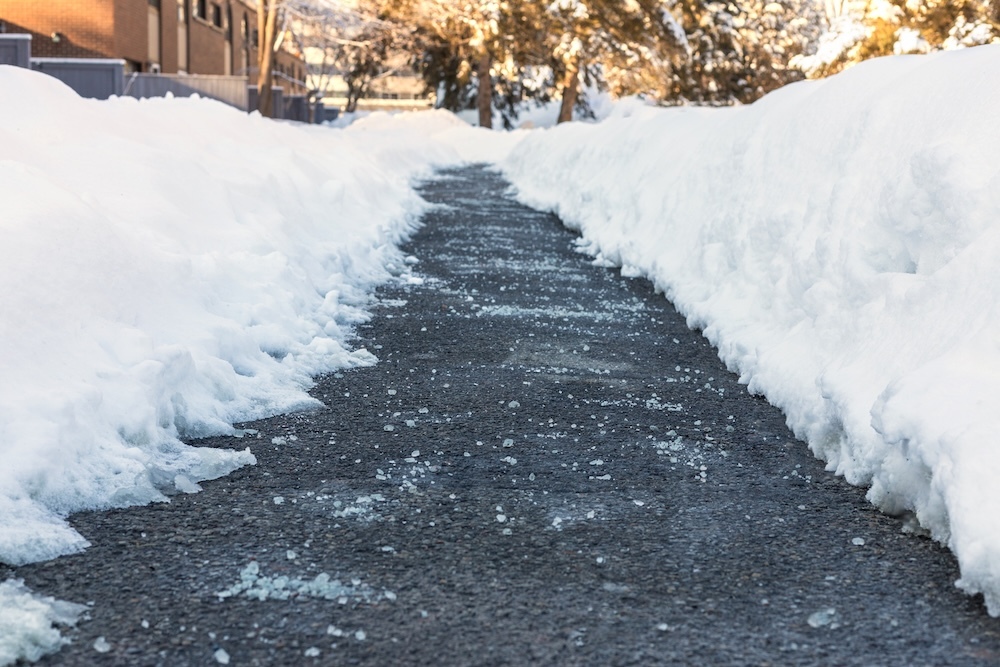
- people salt until the surface looks “white and clean,” not until it’s simply safe
That last habit is where a lot of contamination begins: white pavement feels safer, even when it’s unnecessary.
The Cost: Chloride Is a Long Game
When road salt dissolves, it becomes chloride in water. Chloride doesn’t break down like many other pollutants. It can move into:
- streams and lakes (winter spikes, then lingering elevated levels)
- shallow groundwater (salt applied in winter can show up in baseflow later)
- soil (changing structure and stressing plants)
- drinking water sources (especially in snowbelt regions)
This is why winter salt is often described as a “slow pollution problem.” The peak happens in winter, but the effects can persist long after.
When Salt Works and When It Mostly Doesn’t
The most important upgrade you can make is switching from air-temperature guessing to pavement-temperature awareness.
Salt has a temperature range where it’s practical
A common rule of thumb is that basic rock salt becomes too slow or ineffective as pavement temperatures drop toward the mid-teens (°F). In many winter maintenance guidance documents, ~15°F is treated as a practical cutoff for regular sodium chloride use unless you’re using enhanced strategies or different chemistries.
If it’s below that threshold, spreading more salt often doesn’t solve the problem. It just increases residues and runoff.
Timing matters more than volume
Salt works best when it can contact ice directly and form brine. That usually means:
- shovel/plow first
- apply lightly
- let it work
- reapply only where refreeze risk remains (shaded spots, downspouts, north-facing slopes)
What Sand Does (and What It Doesn’t)
Sand doesn’t melt ice. Sand provides traction.
That’s not a flaw. In certain conditions, traction is exactly what you need.
When sand is the better choice
Sand tends to shine when:
- it’s too cold for salt to work well
- you need immediate grip on compacted snow/ice
- you’re dealing with short-term hazards (steps, steep slopes, driveways)
- you want to reduce chemical use near sensitive areas (lakes, wetlands, wells)
Sand has tradeoffs, so it needs follow-through
Sand can be a cleaner choice than salt in some situations, but it isn’t impact-free:
- it can clog storm drains and contribute to sediment loads during thaw
- it can increase spring cleanup burdens (and dust if left in place)
- it can carry nutrients and fine particles into waterways if unmanaged
The sustainable version of sanding is not “spread sand and forget it.” It’s “use sand for traction, then sweep it up when conditions stabilize.”
The Best Strategy: A Salt + Sand Mix
A mix is often the most practical compromise for homeowners and small properties because it does two jobs:
- salt creates melt power where it can work
- sand provides grip immediately, even if the ice remains
Used thoughtfully, mixes can reduce total salt demand while keeping surfaces safer.
How to use a mix without wasting both
- shovel first (always)
- apply a thin, even layer
- focus on high-risk zones (steps, ramps, shaded patches), not entire pavement
- sweep up excess once the surface is safe and dry
You’re aiming for safe footing, not a bare-pavement aesthetic.
What Happens When We Only Use Salt
If salt becomes the default, three predictable outcomes follow:
1) Water gets saltier, not just in winter
Studies of urban streams show winter chloride spikes and, in many cases, rising long-term trends. Some systems show elevated chloride even outside winter because it infiltrates and slowly releases through groundwater.
2) Infrastructure and vehicles corrode faster
Salt accelerates corrosion of metal, rebar, bridges, and vehicles. This isn’t just cosmetic. It’s a maintenance and safety cost that communities pay for decades.
3) Plants and soils take repeated hits
Salt can stress roadside vegetation and disrupt soil structure and permeability over time. The “dead strip” along many roads in spring is a visible symptom of an invisible cycle.
Smarter Options Before You Reach for More Salt
This is the circular economy move: prevent the problem, reduce inputs, and keep materials from becoming waste.
1) Mechanical removal is the highest-impact “alternative”
- shovel early and often
- break ice mechanically before it thickens
- use a metal-edged shovel for compacted areas
- keep drains clear so meltwater can exit instead of refreezing
The more snow you remove, the less chemistry you need.
2) Brine and pre-wetting: less product, better contact
Many road agencies reduce overall salt use by applying liquid brine or pre-wetted salt so the material sticks and works faster. Homeowners can borrow the principle: targeted application and better contact can reduce total usage.
3) Use “stronger” deicers only where they’re actually needed
Some chloride-based products work better at lower temperatures than sodium chloride. But “works better” does not mean “impact-free.” These chemicals still contribute chloride load.
Use them sparingly and strategically, especially near water.
4) Consider non-chloride alternatives in sensitive zones
Products like acetate-based deicers are sometimes used in environmentally sensitive contexts, but they can be more expensive and are not always practical for everyday residential use.
If you choose an alternative, treat it as a targeted tool, not a permission slip to overapply.
A Practical Decision Guide
Use salt when
- pavement temps are in the effective range
- you need to break a bond and actually melt ice
- you can shovel first and apply lightly
Use sand when
- it’s too cold for salt to work well
- you need immediate traction
- you’re near sensitive water, wetlands, or wells
- you’re on steep or high-slip surfaces where grip matters most
Use a mix when
- you want melt + traction without heavy salting
- conditions fluctuate (freeze-thaw)
- you want safer walking surfaces while reducing chemical load
Create “no-salt zones”
Even if you use salt sometimes, designate salt-free areas:
- near storm drains
- at the edge of driveways that slope toward water
- near gardens and tree roots
- near private wells
This is how small shifts create real ripples.
What’s Changed
Two things have become clearer in recent years:
- Chloride pollution is not just a winter problem
It can persist and build in systems that don’t flush quickly, showing up year-round in some waterways through groundwater release. - Salt reduction is possible without sacrificing safety
Training programs and best practices show that calibrated, targeted application can cut salt use significantly while maintaining safe surfaces.
The future-proof move isn’t “recycle your salt” or “buy a trendy green deicer.” It’s reducing inputs, improving technique, and using traction strategies where melting isn’t realistic.
FAQs
Is sand “better for the environment” than salt?
Sometimes, especially in very cold conditions or near sensitive water. But sand can increase sediment in runoff and clog drains if it isn’t managed. The best approach is to sweep it up after the thaw.
Is it true salt stops working below a certain temperature?
Salt can still have some effect, but it becomes too slow or ineffective for practical use as pavement temperatures drop into the mid-teens (°F). Applying more salt below that range often increases residues more than it increases safety.
What’s the safest approach for steps and walkways?
Shovel early, focus on traction, and treat only high-risk zones. A light mix can improve grip without heavy salting. Always clear meltwater paths so it doesn’t refreeze into sheets.
Does “pet-safe” ice melt solve the pollution issue?
Not automatically. Many “pet-safe” products still use chloride salts. “Safer for paws” is not the same as “safe for waterways.” Read ingredients and use less.
What should I do with leftover salt or sand after a storm?
Sweep it up. Excess material is what ends up in drains and waterways. Store it dry and covered for the next event instead of letting it wash away.
Final Thoughts
Salt isn’t evil. Ice is real. Safety matters.
But winter maintenance is one of those everyday systems where habit quietly becomes pollution. If we treat salt like a precision tool instead of a reflex, we can keep sidewalks and roads safer while keeping our water cleaner.
Small shifts create ripples that grow into waves.