






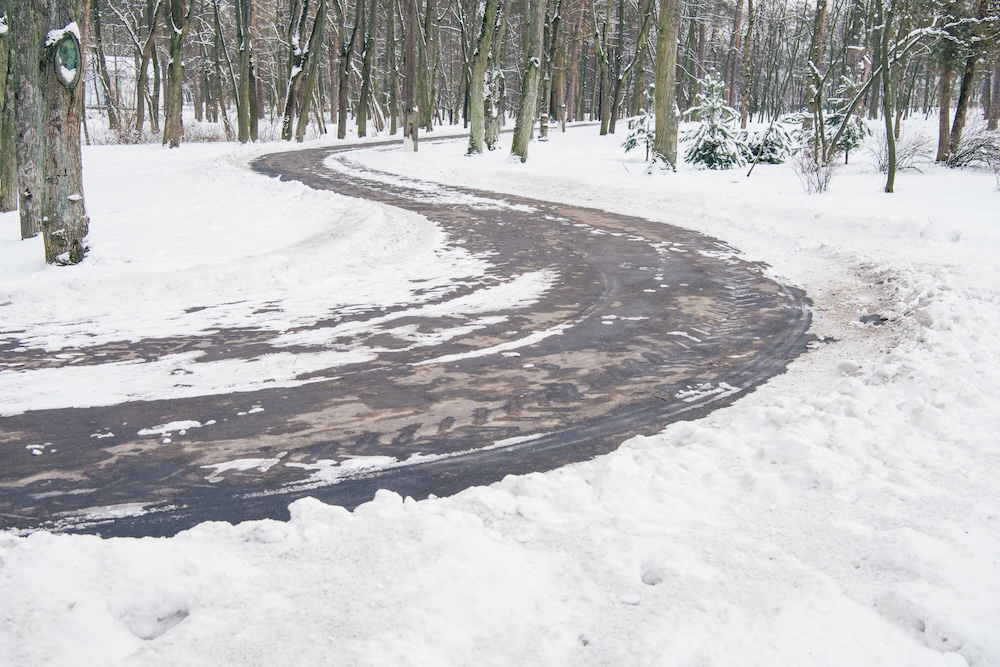
Chloride pollution is the part of winter de-icing we don’t see.
The ice melts. The pavement dries. The season moves on. But the chloride from salt doesn’t “go away” in the same way. It dissolves, travels, and can accumulate in places that don’t flush quickly — stormwater systems, urban streams, roadside soils, and shallow groundwater.
This follow-up post explains what chloride does, how it infiltrates, what it impacts (water, plants, infrastructure, people), and the most realistic ways to reduce harm without sacrificing safety.
What Is Chloride Pollution
Most road and sidewalk deicers are salts. When they dissolve, they release ions — often chloride paired with sodium, calcium, or magnesium.
Chloride is not a “rare chemical.” It’s common. The issue is concentration and location: freshwater ecosystems and drinking-water sources can be pushed outside healthy ranges when winter applications are heavy or routine.
U.S. Geological Survey notes road salt is a major human source of chloride to both surface water and groundwater, and that road-salt use has increased substantially over the decades.
How Chloride Infiltrates and Spreads
Chloride moves through the built environment in a few predictable pathways:
1) Runoff to storm drains and streams
Melting snow carries dissolved chloride into storm drains that often discharge to nearby streams with limited treatment.
2) Infiltration into soils and shallow groundwater
Where meltwater soaks in (shoulders, lawns, uncurbed pavement edges), chloride can enter shallow groundwater and later reappear in stream “baseflow,” keeping levels elevated beyond winter.
3) Storage and “legacy chloride”
Some watersheds act like a sponge. Chloride can be retained and released slowly, which is why some systems show year-round elevation even when salt is applied seasonally.
What Chloride Does to Freshwater Ecosystems
Chloride can harm aquatic life directly at elevated concentrations.
EPA’s aquatic-life chloride criteria are commonly referenced as:
- Chronic (longer exposure): 230 mg/L
- Acute (short exposure spikes): 860 mg/L
A USGS stream monitoring project found winter samples exceeding these criteria in many streams and documented very high spikes during deicing periods.
Freshwater salinization syndrome
Salt doesn’t only add chloride — it can change water chemistry in ways that mobilize other pollutants. U.S. Environmental Protection Agency describes “freshwater salinization syndrome,” where increased salts can make other contaminants more mobile (including metals) and intensify water-quality problems.
Plant Health and Soil Health
Road salt can stress plants in two main ways:
1) Soil structure and root stress
High sodium can degrade soil structure, reducing permeability (water/air movement) and raising stress for roots.
2) Chloride injury inside plant tissue
Extension guidance explains chloride ions can injure plant tissue, reduce water uptake, and create nutrient imbalances — especially when salt exposure is repeated or late winter applications coincide with plants breaking dormancy.
The result is the familiar spring pattern: browning, dieback, stunted growth, and the “dead strip” effect near roads and walkways.
Groundwater and Drinking Water
Chloride can become a drinking-water concern depending on local geology, well depth, proximity to treated roads, and how much flushing occurs.
Two key realities:
Chloride often shows up with sodium
For most people, sodium in drinking water is a small part of total sodium intake — but it matters for people on sodium-restricted diets. EPA’s drinking-water advisory notes that individuals on a very low sodium diet (500 mg/day) may need water sodium levels to be kept at or below 20 mg/L, and those with sodium-sensitive hypertension should consult their healthcare provider about their water source.
Chloride has a taste/acceptability threshold
EPA’s secondary drinking-water standard for chloride is 250 mg/L (aesthetic/taste issues).
Even when a value is “secondary,” it can still signal broader salt intrusion and corrosion risk that’s worth paying attention to.
Infrastructure Impacts
Salt accelerates corrosion — vehicles, bridges, rebar, railings, and sometimes plumbing components downstream of salty water.
And because higher salinity can increase mobilization of metals, it can interact with existing infrastructure issues rather than staying a “standalone” pollution problem.
The Most Common Myth: “If It Melted, It’s Gone”
Chloride pollution is not like litter you can pick up after the storm. It’s dissolved, dispersed, and persistent — especially in urban watersheds where salt is applied repeatedly and water pathways move quickly to streams.
This is why the most future-proof solution is not “recycle harder.” It’s use less, use smarter, and design out the need wherever possible.
How to Solve Chloride Pollution Without Trading Away Safety
There isn’t one magic alternative deicer. The most effective approach is a layered strategy: prevention, precision, and recovery.
1) Prevention: remove snow early so you need less chemistry
- shovel/plow sooner and more often
- break ice mechanically before it becomes a bonded layer
- keep drains clear so meltwater doesn’t refreeze into sheets
This is the biggest salt reducer because it changes the surface conditions that make people panic-apply.
2) Precision: apply salt like a tool, not a habit
- don’t salt during heavy snowfall where it will be buried
- spot-treat shaded zones, slopes, steps, and refreeze hotspots
- avoid “white pavement = safe pavement” thinking
- follow temperature guidance (salt becomes ineffective/slow in very cold pavement conditions)
If you manage properties, training programs like “smart salting” emphasize calibrated spreaders, correct rates, and pavement-temperature awareness as core best practices.
3) Traction-first where melt is unrealistic
When it’s too cold for salt to work well, traction materials can reduce slips without adding chloride:
- sand (with follow-up sweeping)
- gravel/fines where appropriate
Sand isn’t impact-free, but it avoids the “chloride load” problem if you sweep and manage sediment.
4) Keep salt out of waterways by design
- create “no-salt zones” near storm drains, streams, and wells
- redirect downspouts away from salted paths (reduces refreeze and runoff pulses)
- store salt covered and dry (wet piles leach)
5) For households on wells
If you’re near heavily salted roads or you notice salty taste:
- consider periodic testing for chloride and sodium, especially late winter/early spring
- if someone in the home is on a sodium-restricted diet, talk to a clinician about whether your water sodium matters for them specifically
What’s Changed
Two trends make chloride more important now:
- Road salt use has scaled up over time, and monitoring shows chloride increases can persist across seasons in snow-affected urban watersheds.
- The science has matured from “salt harms fish” to “salt can restructure water chemistry,” mobilizing other contaminants and making freshwater protection more complex than a single-pollutant problem.
FAQs
Is chloride pollution mainly a city problem?
It’s most visible in urban and suburban areas with dense roads and repeated deicing, but any frequently salted area with connected runoff pathways can be affected.
Does switching from salt to “pet-safe” deicer fix it?
Not automatically. Many “pet-safe” products are still chloride salts. The label often speaks to paws, not waterways. The lowest-impact move is still using less and using traction where possible.
Can I fix chloride pollution by filtering stormwater?
Stormwater solutions can help, but chloride is dissolved and harder to remove than solids. Prevention and reduced application are usually the biggest levers.
What’s the most practical homeowner change?
Shovel earlier, spot-treat only the highest-risk areas, and stop salting by default when traction would solve the slip risk.
Final Thoughts
Chloride pollution is what happens when a short-term safety tool becomes a long-term habit.
We can keep people upright without salting our water every winter — not by shaming anyone for using salt, but by treating it like what it is: a precision tool for specific conditions, not a default setting.

