





Pollution is often described as something obvious.
Smoke in the air. Oil on water. Trash along a roadside. A chemical spill. A river that looks wrong.
But some of the most widespread pollution is not visible at all.
Microplastics are one example. These tiny plastic particles have been found in oceans, rivers, soil, indoor air, outdoor air, food, drinking water, and human tissue. They did not get there from one source. They built up slowly from clothing, tires, packaging, paint, industrial pellets, discarded plastics, and everyday products that shed, fragment, or wash away.
Chloride pollution from road salt is another example. It dissolves into meltwater, moves through storm drains and soil, and enters streams, lakes, and groundwater. Once chloride is in water, it does not simply disappear.
PFAS and other synthetic chemicals add another layer. Some are used to make products resist water, stains, grease, or heat. Some persist for years. Some move through water, soil, wildlife, and people long after the original product is gone.
This guide explains how invisible pollution moves through air, water, soil, ecosystems, and daily life. It also connects to Uber Artisan’s deeper coverage of microplastics, chloride pollution, synthetic additives, and environmental health.
What Are Microplastics?
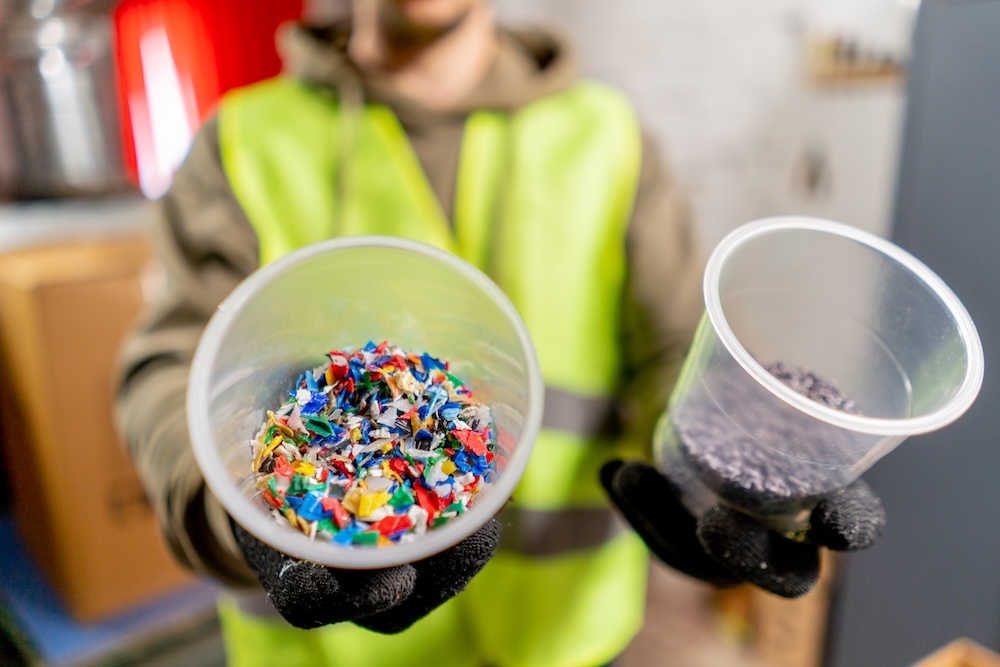
Microplastics are small plastic pieces or fibers, generally defined as plastic particles smaller than five millimeters. Some are visible if you look closely. Others are so small they cannot be seen without specialized equipment.
Nanoplastics are even smaller. They are measured at the nanoscale and are harder to detect, study, and filter.
Microplastics come from two broad sources.
Primary microplastics are made small from the start. Examples include some industrial plastic pellets, plastic powders, and microbeads that were once used in certain personal care products.
Secondary microplastics form when larger plastic items break down. A plastic bag, bottle, wrapper, foam container, fishing line, or synthetic fabric does not biodegrade like a leaf or food scrap. Instead, sunlight, heat, friction, saltwater, and weathering break it into smaller and smaller pieces.
That process does not make the plastic harmless. It often makes the problem harder to see and harder to remove.
Microplastics enter the environment through many pathways:
- Washing synthetic clothing
- Tire wear from roads
- Plastic packaging breaking apart
- Industrial pellet spills
- Stormwater runoff
- Wastewater discharge
- Plastic mulch used in agriculture
- Sewage sludge applied to soil
- Paint, coatings, and dust
- Litter that fragments over time
Once microplastics enter the environment, they can move through water, settle into sediment, blow through air, enter soil, and be swallowed by wildlife.
The smaller they get, the harder they are to control.
Read more:
- The World of Invisible Pollutants
- Invisible Pollution: The Toxins You Don’t See But Still Breathe, Drink, and Wear
Where Microplastics Come From
Microplastic pollution does not come from one obvious place.
That is part of what makes it difficult to solve.
Synthetic clothing
Synthetic fabrics are one of the best-known sources of microplastic fibers. Polyester, nylon, acrylic, fleece, and spandex are made from plastic-based fibers. When these fabrics are washed, worn, dried, or discarded, tiny fibers can break loose.
Washing machines send some of those fibers into wastewater systems. Treatment plants may capture a portion, but not all. Fibers that pass through can enter rivers, lakes, and oceans. Fibers captured in sludge can still enter soil if that sludge is used on agricultural land.
Synthetic clothing also sheds outside the laundry room. Wearing, drying, and storing synthetic garments can release fibers into household dust and indoor air.
Tire wear
Vehicle tires release tiny particles as they rub against roads. These particles contain rubber, synthetic polymers, road dust, metals, and chemical additives.
Rain carries tire particles into storm drains, streams, rivers, and soil along roadways. In cities and suburban areas, tire wear can be a major source of microplastic pollution in runoff.
This is one reason microplastics are not only a plastic bottle problem. They are also a transportation problem.
Packaging and single-use plastic
Plastic packaging is everywhere because it is cheap, light, and convenient.
The problem starts when plastic is discarded, littered, poorly managed, or exposed to weather. Bags, bottles, wrappers, cups, lids, foam containers, and food packaging can break down into fragments over time. Rivers and coastlines often collect these fragments because water carries plastic from streets, drains, and landfills into larger ecosystems.
Even when plastic does not look like litter anymore, it may still exist as smaller particles.
Paint, coatings, and industrial materials
Paints, coatings, plastic pellets, powders, and industrial materials can also release microplastics.
Pre-production plastic pellets, often called nurdles, can spill during manufacturing or transport. Once released, they are difficult to recover. Paints and coatings can wear off buildings, ships, roads, and products, adding small synthetic particles to the environment.
These sources are less visible to the public than plastic bags or bottles, but they matter.
Agriculture and soil inputs
Agriculture can introduce microplastics into soil through plastic mulch films, irrigation materials, coated fertilizers, sewage sludge, and contaminated compost.
Soil pollution is often less visible than ocean pollution, but it may be just as important. Microplastics in soil can affect structure, water movement, microbial communities, and organisms that live underground. Research is still developing, but the concern is real.
Read more:
Where Microplastics End Up
Microplastics have been detected across many environments.
They are not staying where they started.
Water
Microplastics enter rivers, lakes, streams, wetlands, oceans, and groundwater pathways through runoff, wastewater, litter breakdown, and atmospheric deposition.
Freshwater systems are especially important because they act as both pathways and collection points. A fiber released from a washing machine may pass through wastewater treatment, enter a river, settle into sediment, or eventually reach the ocean.
Marine animals can ingest microplastics directly or indirectly through the food chain. Fish, shellfish, seabirds, turtles, and marine mammals have all been studied for microplastic exposure.
Soil
Soil is now understood as a major reservoir for microplastics.
Particles can enter soil from plastic mulch, sludge, compost, litter, tire wear, road runoff, and airborne dust. Once in the soil, microplastics may persist for years. They can also move deeper through the soil profile or be carried into nearby water during rain.
This matters because soil is not just dirt. It is a living system that supports food production, plants, fungi, insects, and microbes.
Air
Microplastics can become airborne.
Some come from synthetic textiles. Some come from tire wear, dust, degraded plastic, and indoor materials. Studies have found microplastic particles in indoor air, outdoor air, remote mountain areas, and Arctic regions.
Indoor exposure matters because people spend so much time inside. Synthetic carpets, furniture, clothing, curtains, and household dust can all contribute to particles in the air.
Food and drinking water
Microplastics have been detected in seafood, salt, bottled water, tap water, honey, beer, and other foods and drinks. The amount varies widely depending on the product, packaging, source water, testing method, and environment.
The science is still developing. Detection does not automatically prove harm at every exposure level. But it does show how widely plastic particles have entered systems people rely on every day.
Human bodies
Microplastics have been detected in human blood, lung tissue, placenta, stool, and other samples in scientific studies.
This does not mean every exposure leads to disease. It means plastic particles are entering the body, and researchers are still working to understand what that means over time.
The main concerns include inflammation, physical irritation, chemical additives, pollutants carried on plastic surfaces, and the possibility that very small particles may move across biological barriers.
The honest answer is that scientists know enough to be concerned, but not enough to claim the full human health picture is settled.
Chloride Pollution: The Road Salt Problem
Microplastics are not the only invisible pollution problem.
Road salt is another.
In cold regions, salt is spread on roads, sidewalks, parking lots, and driveways to melt ice and improve safety. Most road salt is sodium chloride. When it dissolves, chloride moves with meltwater into storm drains, roadside soil, streams, lakes, and groundwater.
Chloride does not break down in water.
That makes it different from many pollutants people imagine fading away over time. Once chloride enters a freshwater system, it can remain there or move downstream. In some regions, chloride levels in freshwater have been rising for decades because of winter salt use.
Freshwater ecosystems are adapted to low-salt conditions. When chloride concentrations rise, fish, insects, amphibians, zooplankton, and aquatic plants can be stressed or harmed. Some species are more sensitive than others, but the effect can reach the whole food web.
Chloride pollution can also affect drinking water, roadside trees, soil health, concrete, vehicles, bridges, pipes, and other infrastructure.
The hard part is that chloride is difficult to remove once it enters water. Prevention matters more than cleanup.
That means using salt carefully, applying the right amount, avoiding overuse, and choosing safer winter maintenance practices when possible.
Read more:
- Chloride Pollution: The Road Salt Afterlife
- How Chloride Pollution Harms Freshwater Life
- Salt vs Sand vs Mix: Safer Winter De-Icing
Synthetic Additives and Chemical Pollution
Many everyday products contain synthetic chemicals that most people never think about after they bring the product home.
Some are used to make items waterproof, stain-resistant, grease-resistant, flexible, fragrant, flame-resistant, or longer lasting. Some are necessary for performance. Some are added mainly to change how a product feels, smells, looks, or markets itself.
The issue is not that every synthetic chemical is automatically dangerous.
The issue is that many chemicals can move.
They can wash off, evaporate, shed with particles, settle into dust, enter water, bind to soil, or persist after the product is discarded.
PFAS
PFAS are a large family of synthetic chemicals used in products such as water-resistant clothing, stain-resistant fabrics, nonstick coatings, food packaging, firefighting foam, and some industrial processes.
They are often called forever chemicals because many PFAS compounds do not break down easily in the environment or in the human body.
Some PFAS have been linked in studies to health concerns, including immune, developmental, liver, hormonal, and cancer-related effects. Not every PFAS compound has the same level of evidence, and research is still developing across this large chemical family.
Still, the persistence alone makes PFAS a major environmental concern.
Synthetic fragrances
Air fresheners, cleaning products, detergents, candles, personal care products, and scented sprays can release volatile organic compounds into indoor air.
Not every fragrance exposure is dangerous. But fragrance formulas are often complex, and labeling does not always make it easy to understand what people are breathing. Some fragrance compounds can also react with other indoor pollutants and form secondary pollutants.
For people with asthma, migraines, chemical sensitivity, or respiratory irritation, heavily fragranced products can be a real problem.
Petroleum-based ingredients
Petroleum-derived ingredients appear in many products, including cosmetics, moisturizers, lip products, hair products, plastics, synthetic fabrics, and packaging.
Some are refined and considered safe for their intended use. Others raise concerns because of contamination risks, persistence, disposal, or the larger fossil-fuel system behind them.
The bigger point is simple:
A product does not stop affecting the environment once you use it.
It may wash down a drain, enter indoor air, shed particles, sit in a landfill, or break into smaller pieces that keep moving through the world.
Read more:
- The Truth About Synthetic Additives in Everyday Products
- The Illusion of Clean: Why Our Homes and Products Aren’t as Safe as We Think
- The Dangers of Synthetic Fragrances in Air Fresheners
What Pollution Does to Ecosystems
Pollution rarely acts alone.
It combines with habitat loss, climate change, invasive species, overuse of resources, and other pressures. That combination can be harder on ecosystems than one pollutant by itself.
Microplastics and wildlife
Animals can mistake microplastics for food or ingest them accidentally while feeding.
In marine and freshwater environments, microplastics have been found in fish, shellfish, seabirds, turtles, marine mammals, plankton, and invertebrates. Possible effects include reduced feeding, internal irritation, blocked digestion, chemical exposure, and stress on growth or reproduction.
The effect depends on particle size, shape, concentration, chemical makeup, and the species exposed.
Fibers may behave differently from fragments. Tire particles may behave differently from packaging fragments. Nanoplastics may behave differently from larger microplastics.
That is why the science is complex.
Chloride and freshwater life
Freshwater species are not built for salty water.
When chloride rises, it can disrupt water balance in organisms, alter reproduction, affect growth, and change which species survive in a stream or lake. Sensitive species may decline first. More tolerant species may take over.
That can change the food web.
Small organisms such as zooplankton and aquatic insects may not seem important at first glance, but they feed fish, birds, amphibians, and other wildlife. Damage at the base of the food chain can ripple upward.
Chemicals and biological systems
Some synthetic chemicals can interfere with hormones, reproduction, development, or immune function in wildlife.
Endocrine-disrupting chemicals are a major concern because small changes in hormonal signaling can affect growth, fertility, behavior, and survival. Fish, amphibians, birds, mammals, and invertebrates may all be vulnerable depending on the chemical and exposure level.
Ecosystems can recover when pollution is reduced, but recovery is not guaranteed. It may take years or decades. Some damage is easier to prevent than reverse.
That is why pollution prevention matters.
What You Can Do
Pollution at this scale requires systemic change.
That means better product design, stronger chemical rules, improved wastewater treatment, safer winter road practices, producer responsibility, better plastic management, and policies that reduce pollution before it enters the environment.
Individual choices cannot replace regulation or industry reform.
But they still matter.
They reduce your personal contribution. They shift demand. They help normalize better products and better habits. They also make it easier to see where larger change is needed.
Reduce synthetic fiber shedding
Wash synthetic clothing less often when possible. Use cold water. Wash full loads. Avoid harsh cycles unless needed. Air dry when practical. Consider a microfiber-catching laundry bag or washing machine filter.
These tools do not solve microfiber pollution completely, but they can reduce the amount leaving your home.
Use less road salt
If you apply salt at home, shovel first. Use only what is needed. Do not apply salt before heavy rain. Avoid salting when temperatures are too low for standard salt to work well.
Sand can add traction without adding chloride, although it has its own cleanup and sediment issues. The best approach is careful use, not automatic overuse.
Reduce single-use plastic
Use fewer disposable plastic bags, bottles, utensils, wrappers, and containers when realistic. Reusable options are not perfect, but they reduce the amount of plastic available to fragment into smaller particles.
Do not buy reusable products you will not actually use. The goal is lower waste, not a cabinet full of unused replacements.
Be careful with heavily treated products
Look for products with clear ingredient information. Be skeptical of vague claims like clean, green, safe, natural, or non-toxic unless the company explains what those words mean.
Avoid unnecessary stain-resistant, water-resistant, grease-resistant, or heavily fragranced products when you do not need those features.
Improve indoor air habits
Ventilate when using cleaning products, paints, sprays, or scented products. Choose unscented options when possible. Dust and vacuum regularly, especially if you have synthetic carpets, rugs, textiles, or upholstered furniture.
A lot of invisible pollution indoors rides on dust.
Support better policy
Some of the most effective solutions require action beyond the household.
Examples include PFAS limits, better labeling, washing machine microfiber filtration standards, reduced road salt use, improved stormwater management, plastic pellet controls, and producer responsibility laws.
Supporting local and national policies can matter more than any single product swap.
Stay informed without panicking
The science around microplastics, nanoplastics, PFAS, and chemical pollution is developing quickly.
That can feel unsettling, but it is also useful. Better measurement leads to better understanding. Better understanding leads to better rules, products, and habits.
The goal is not fear.
The goal is clearer awareness.
Frequently Asked Questions
What are microplastics?
Microplastics are tiny plastic pieces or fibers smaller than five millimeters. They can come from manufactured small plastics, synthetic clothing fibers, tire wear, paint, industrial pellets, and larger plastic items breaking down over time.
Where do microplastics come from?
Major sources include synthetic textiles, tire wear, plastic packaging, industrial pellets, paint, coatings, plastic mulch, wastewater, stormwater runoff, and litter that fragments in the environment.
Are microplastics harmful to human health?
Microplastics have been detected in human tissue, including blood and lungs. Research is still developing. Scientists are studying possible concerns such as inflammation, particle movement in the body, chemical additives, and pollutants carried by plastic particles. The full long-term health risk is not yet settled.
What is chloride pollution?
Chloride pollution happens when chloride from road salt, water softeners, industrial sources, wastewater, or other activities enters freshwater systems. Chloride does not break down in water. At high enough levels, it can harm aquatic life, affect drinking water, damage infrastructure, and change freshwater ecosystems.
Why is road salt bad for freshwater?
Road salt dissolves into meltwater and moves into soil, streams, lakes, rivers, and groundwater. Freshwater organisms are adapted to low-salt conditions. Rising chloride levels can stress or harm fish, insects, amphibians, plants, and other aquatic life.
What are PFAS?
PFAS are a large group of synthetic chemicals used for water resistance, stain resistance, grease resistance, firefighting foam, and industrial applications. Many PFAS persist in the environment and human body. Some have been linked to health concerns in scientific studies.
What can I do about microplastic pollution?
Wash synthetic clothing less often, use cold water, consider a microfiber filter or laundry bag, reduce single-use plastic, avoid unnecessary synthetic embellishments, support stronger pollution rules, and choose durable products that last longer.
Can individual actions really help?
Yes, but they are not enough by themselves. Individual choices can reduce pollution and shift demand, but large-scale progress also requires better product design, regulation, infrastructure, and industry accountability.
Pollution is not always one dramatic event.
Often, it is accumulation.
It builds from what products are made of, how they are used, how they break down, where waste goes, and what systems exist to manage it.
Microplastics, chloride, PFAS, synthetic fragrances, tire particles, and chemical additives all show the same lesson: pollution moves. It travels through drains, roads, air, soil, rivers, food chains, homes, and bodies.
That is not a reason to give up.
It is a reason to look more clearly.
The more we understand where pollution comes from, the better we can reduce it through personal choices, better products, stronger rules, and public pressure.
Invisible pollution becomes harder to ignore once you know where to look.
Sources
- National Oceanic and Atmospheric Administration
- United Nations Environment Programme
- United States Environmental Protection Agency
- European Environment Agency
- World Health Organization
- Freshwater Science
- Environmental Science and Technology
- Peer-reviewed research on microplastics, PFAS, chloride pollution, indoor air quality, and freshwater ecology