




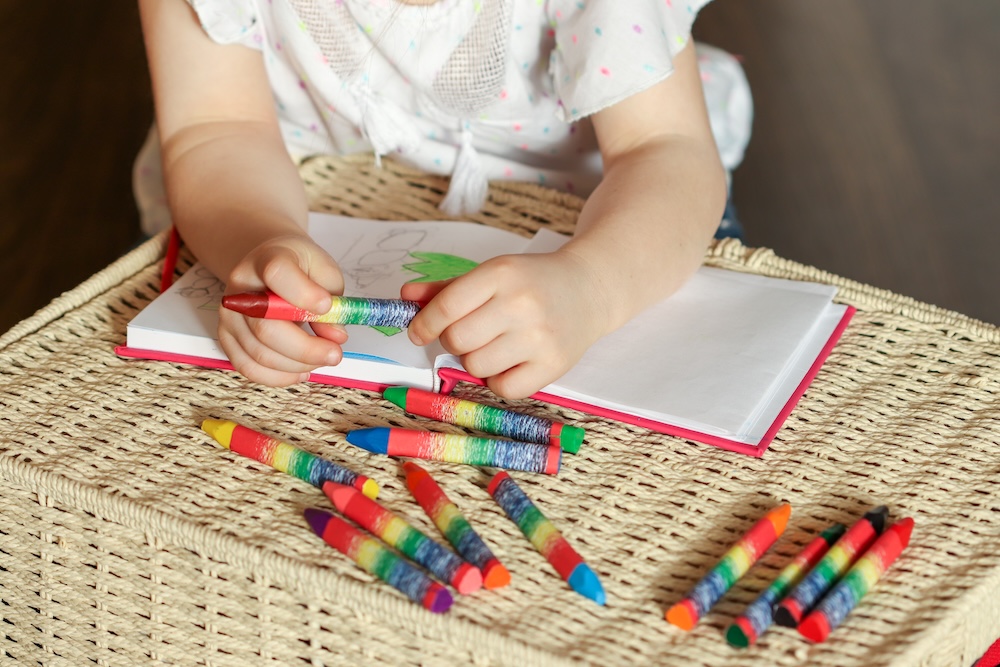
Crayons feel harmless. They’re colorful, waxy sticks of creativity — simple tools for children’s drawings and childhood art projects. Who would ever suspect a crayon?
The illusion is powerful: crayons are marketed as safe, friendly, and even essential for learning. But the reality is that most crayons are made from paraffin wax, a petroleum byproduct. Billions of crayons are produced every year. Together, they add up to millions of pounds of fossil-fuel waste, disguised as childhood art supplies.
Crayons are not just innocent playthings. They are a reminder of how deeply fossil fuels infiltrate even the most unlikely corners of daily life.
What Are Crayons Made Of?
The standard crayon recipe is simple: paraffin wax mixed with pigment. Paraffin wax is created during the refining of petroleum. It’s solid, holds color well, and melts at low heat — making it a convenient choice for manufacturers.
But “convenient” comes at a cost. Every crayon is a small piece of fossil fuel. Every box is a bundle of paraffin locked into children’s toys. Multiply this by billions, and the footprint is anything but small.
The Scale of the Problem
- Roughly 12 million crayons are made every day — over 3 billion annually.
- That’s an estimated 60 million pounds of paraffin wax turned into crayons each year.
- Most crayons are used once, broken, or tossed after school projects. Almost none are recycled.
The result: billions of tiny petroleum sticks becoming plastic-like waste, scattered across classrooms, homes, landfills, and oceans.
Why It Matters
Hidden Petroleum Products
Few people realize crayons are fossil fuel–based. Packaging often emphasizes “non-toxic” or “safe for kids,” without acknowledging the petroleum origins. The word “wax” feels natural, masking the fact it’s petroleum wax.
Waste & Longevity
Paraffin does not biodegrade quickly. Crayons tossed in the trash may sit for centuries before breaking down. In the meantime, they contribute to the global flood of plastic-like waste.
Teaching by Example
Children grow up with crayons as their first art tool. When sustainability isn’t built into the design, the lesson taught — quietly and unintentionally — is that petroleum products are normal, harmless, and disposable.
Alternatives Exist
Not all crayons need to be petroleum-based. Some brands and small producers are experimenting with natural waxes such as:
- Beeswax crayons — renewable, biodegradable, but more expensive.
- Soy wax crayons — plant-based, compostable, with softer texture.
- Recycled crayons — made by remelting used or broken crayons, extending their life cycle.
These alternatives show that creativity doesn’t require fossil fuels. But they remain niche compared to the mass-market paraffin crayon industry.
What You Can Do
- Choose plant-based or beeswax crayons where available.
- Support companies that clearly label ingredients and avoid petroleum wax.
- Collect and remelt broken crayons into new sticks instead of throwing them away.
- Ask schools and art programs to consider sustainable supplies.
- Use crayons to start conversations with kids about sustainability — turning art time into awareness.
FAQs
Are crayons toxic?
Most major brands are labeled non-toxic and safe if used as intended. The issue isn’t acute toxicity, but long-term environmental impact from petroleum use and waste.
Do crayons biodegrade?
Paraffin wax crayons degrade very slowly, similar to plastic. Natural alternatives like soy or beeswax are far more biodegradable.
Can crayons be recycled?
Technically yes, by remelting and reforming. Some organizations run “crayon recycling” programs, but large-scale recycling does not exist.
Are alternatives as good as paraffin crayons?
Natural wax crayons may feel softer or have lighter colors, but they work well and are safer for the planet.
Final Thoughts
Crayons don’t seem like a fossil fuel product. That’s the illusion. In reality, they are petroleum sticks handed to children by the billions each year.
If we can rethink something as small and ordinary as a crayon, we can begin to see how deeply fossil fuels run through our lives. We can start teaching children not just how to draw, but how to live in ways that respect the Earth. Creativity should not come at the cost of the planet.