






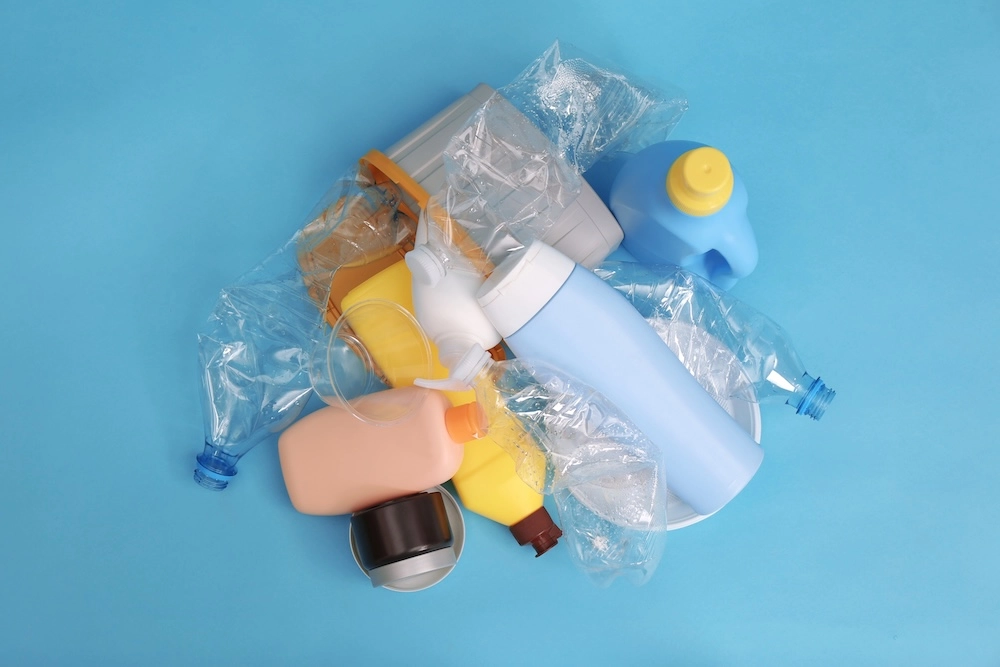
It’s one of the most common comfort lines in modern life:
“Plastic’s fine. It just gets reused.”
It sounds responsible. It feels circular. It lets everyone move on—no awkwardness, no guilt, no pause to picture where that plastic actually goes next.
But this line is part of the problem. Not because the person saying it is bad—most people repeating it are trying to be reassuring, polite, or practical. It’s a problem because it quietly rewrites reality:
- “Reuse” becomes a vague promise instead of a real system.
- “Recycling” becomes a moral permission slip instead of a last-resort tool.
- Plastic stays normalized—even when the outcomes aren’t circular, and often aren’t safe.
If we want to reduce harm, we have to name the pattern honestly:
Unintentional greenwash isn’t just marketing. It’s everyday language that turns a linear waste stream into a comforting story.
This post breaks down what “plastic gets reused” actually means in practice—and what real circular choices look like when we stop treating waste as a PR issue.
What people mean when they say “plastic gets reused”
Most of the time, the cashier isn’t making a data claim. They’re making a social claim:
- “Don’t worry about it.”
- “You’re still a good person.”
- “This doesn’t really matter.”
- “This is handled somewhere else.”
That reassurance is powerful because the truth is heavier. The truth requires us to sit with three uncomfortable facts:
- Not all plastic is recyclable (even if it looks like it is).
- Not all plastic that is collected gets recycled (sorting and processing lose material).
- Even when plastic is recycled, it’s often downcycled into lower-value products that still become waste.
So “plastic gets reused” becomes a shortcut—a way to avoid the full story.
Reuse, recycling, and downcycling are not the same thing
The fastest way to de-greenwash this topic is to use the words correctly.
Reuse
Reuse means the same item is used again as the same kind of item—ideally many times—without being broken down into raw material.
- Refillable bottles and containers
- Durable totes used for years
- Deposit-return packaging designed for multiple cycles
- Reuse systems that are planned, not improvised
True reuse requires infrastructure: design, collection, cleaning, and redistribution.
Recycling
Recycling means collecting, sorting, and processing material so it becomes feedstock for new products.
This can work well in certain cases (some metals, some paper), but plastic is especially difficult because it’s not one material—it’s a family of polymers, blends, additives, dyes, and formats.
Downcycling
Downcycling is when material is turned into lower-quality output with fewer future options.
Examples people often celebrate as “reused plastic” are usually downcycling:
- mixed plastic into park benches
- plastic into low-grade construction products
- plastic into textiles (that can shed microfibers)
Those products can have a role, but they don’t create a loop. They often delay disposal, not prevent it.
That’s the key correction:
Delaying the trash is not the same as ending the trash.
What actually happens to most plastic after we “use it”
To understand why the “gets reused” line is misleading, we have to talk about outcomes—not intentions.
Globally, credible assessments consistently show that only a small share of plastic waste ends up being successfully recycled, while large shares are landfilled, incinerated, or mismanaged.
Even within “recycling,” the story is not “plastic becomes plastic again.” It is often:
- collected
- contaminated
- sorted imperfectly
- processed with losses
- turned into lower-value outputs
- and eventually disposed anyway
Why plastic recycling struggles to become truly circular
Plastic recycling is constrained by real-world physics and economics:
- Contamination: food residue and mixed materials ruin batches
- Mixed polymers: many plastics can’t be melted together
- Additives: stabilizers, pigments, and flame retardants complicate processing
- Thin films and multi-layer packaging: hard to sort and process
- Market demand: if virgin plastic is cheap, recycled plastic struggles to compete
- Quality degradation: many plastics lose performance when reprocessed
A circular loop is only a loop if the material reliably cycles. For many plastic categories, the system doesn’t behave like a loop—it behaves like a funnel.
The “recycling symbol” problem: why we’re trained to misunderstand plastic
A major reason this myth persists is labeling.
Many people see a triangle symbol and assume “recyclable.” But those numbers in triangles are resin identification codes—they identify the type of plastic, not whether it will actually be accepted and recycled where you live.
This is a subtle but consequential form of everyday greenwash: the symbol looks like permission, even when local systems can’t process the item.
And because most people are trying to do the right thing, that confusion produces “wishcycling”—placing non-recyclables in recycling bins, which can contaminate loads and make recycling less effective overall.
If we want circular outcomes, we need honest labeling and honest language.
“Plastic gets reused” often means “plastic gets displaced”
When someone says plastic is reused, they’re usually imagining one of these narratives:
- “It becomes new bottles.”
- “It becomes something useful.”
- “It stays out of the environment.”
- “It doesn’t hurt anything.”
But in practice, “reused” can mean:
- landfilled (sealed away, still persistent)
- incinerated (converted into air emissions and ash)
- exported (moved to another country’s waste system)
- downcycled (turned into a product that still becomes waste)
- mismanaged (leaked into waterways or open dumping)
This is why the myth is so socially effective: it turns a messy, multi-outcome waste stream into a single clean sentence.
The deeper issue: comfort stories keep the linear economy stable
Here’s the hard truth that sits under checkout-counter reassurance:
A linear economy depends on emotional shortcuts.
If everyone had to fully feel the consequences of single-use culture in real time—polluted rivers, microplastics, incinerator emissions, community exposure, fossil fuel extraction—behavior would change faster than systems could keep up.
So the culture offers relief:
- “It’s recyclable.”
- “It’s reused.”
- “Someone else handles it.”
- “Technology will solve it.”
None of those statements are always false. The problem is that they are often used as blanket truths—and blanket truths are how greenwash spreads without anyone intending it.
This is what “brainwashed” can mean in a grounded, non-conspiracy sense:
We are trained to believe that a disposal symbol equals a circular system.
What real circular choices look like (without pretending they’re perfect)
UberArtisan’s standard is not “purity.” It’s harm reduction with honesty.
Here’s what circular looks like in practice—where it works, and where it has limits.
Circular option 1: Refuse what you don’t need
The most circular item is the one that never enters the waste stream.
- Say no to bags unless you truly need one
- Combine purchases so fewer containers are used
- Choose loose items when realistic
- Skip unnecessary packaging extras (cutlery, condiment packets)
This is the hardest culturally—because it requires disrupting “normal.”
Circular option 2: Choose durable, high-use reusables
A reusable tote is only better if it’s actually used repeatedly. The solution isn’t owning “reusable things.” It’s building habits that keep them circulating through your life.
Practical tactics:
- keep a foldable tote in every coat or car door pocket
- make “bag by the keys” a default
- set a “one tote for small trips” standard
Circular option 3: Use refill and return systems when available
Refill and deposit-return systems are closer to true circularity because they’re designed for multiple cycles.
Even here, honesty matters:
- A refill system is only circular if it’s widely adopted and properly managed.
- A return system only works if logistics and cleaning standards are real and transparent.
But these are the models worth scaling—because they reduce single-use demand upstream.
Circular option 4: Prioritize materials with strong recycling outcomes
Not all materials behave the same at end-of-life. When you can choose, choose what local systems can actually handle.
This isn’t about “what should be recyclable.” It’s about what is recyclable in your area, with real end markets.
Circular option 5: Treat plastic “repurposing” with caution
This is where UberArtisan draws a clear line: repurposing plastic is not automatically eco-safe.
- Some plastics contain additives you don’t want in new contexts.
- Some “repurposed” items create microplastic shedding or dust.
- Some “DIY reuse” extends the life of an item—but still ends in disposal.
If you repurpose plastic, do it as a harm-reduction move, not a virtue badge—and avoid turning it into a justification for more plastic entering your home.
What to say instead (without shaming anyone)
If you want to break the “gets reused” myth without turning the checkout line into a debate, these scripts work because they’re respectful, short, and true.
Option A: Gentle and factual
“Some of it gets recycled, but a lot doesn’t. I’m trying to reduce single-use when I can.”
Option B: Neutral and action-focused
“I’m trying to build the habit of skipping bags. Thank you for helping.”
Option C: Circular economy framing
“I’m aiming for reuse systems, not just disposal systems.”
Option D: If you want a one-line truth
“I’m trying to reduce plastic, because recycling doesn’t catch most of it.”
You don’t have to “win” the conversation. You just have to refuse the myth quietly and consistently.
That consistency is where the ripple starts.
What’s Changed
If this topic feels more urgent lately, it’s not your imagination. A few shifts have made “plastic gets reused” harder to defend as a default story:
1) The global narrative is shifting from recycling to upstream reduction
Major institutions increasingly emphasize that recycling alone cannot solve plastic pollution at the current scale. The focus is moving toward reducing production of unnecessary single-use plastics, redesigning products, and building reuse systems.
2) Better data is clarifying outcomes
More reporting has distinguished between:
- “collected for recycling”
- “processed”
- “successfully recycled into useful output”
That clarity matters because it exposes how much material is lost between the bin and a real circular outcome.
3) Labels and marketing claims are under greater scrutiny
There’s growing attention on what “recyclable” claims should mean, and whether consumer-facing symbols are misleading when recycling access or end markets are limited.
These shifts don’t mean the problem is solved. They mean the story is becoming harder to hide behind.
Practical steps that reduce harm (today)
Here’s the UberArtisan version: actionable, realistic, and honest about limits.
At the store
- Default to no bag when it’s reasonable
- Bring a single small tote for quick trips
- Choose fewer packaged items when you have an alternative
- Ask for paper only if it’s actually needed—paper still has impacts, but it behaves differently at end-of-life and in leakage scenarios
At home
- Build one “reuse zone” (totes, jars, containers) that’s easy to grab
- Reduce “single-use backups” that quietly become defaults
- Avoid buying products where the sustainability story is mostly packaging claims
In your community
- Support refill shops and return systems that build real circular infrastructure
- Ask local stores what reuse pilots they’ll consider (tote incentives, container returns)
- Support local policy that improves waste systems and reduces problematic single-use formats
FAQs
Why do people think plastic “gets reused”?
Because the symbols, messaging, and cultural scripts imply that recycling is reliable and circular. It’s comforting, and it reduces friction in everyday life.
Isn’t recycling still worth doing?
Yes—when it’s real and clean. Recycling can reduce harm for certain materials and formats. The problem is using recycling as a justification for producing and consuming unlimited single-use plastic.
What’s the difference between “recyclable” and “actually recycled”?
“Recyclable” often means “in theory” or “in some places.” “Actually recycled” means it was collected, sorted, processed with losses accounted for, and turned into usable output with a real end market.
Are plastic totes better than single-use bags?
They can be—if you use them repeatedly. The sustainability benefit comes from the number of uses, not the label.
Does repurposing plastic at home help?
Sometimes it reduces harm by extending use, but it’s not automatically safe or circular. It can also normalize more plastic entering your home. Use it as a practical stopgap, not a solution story.
What’s the most effective step?
Reduce single-use demand where you can, and support systems that make reuse normal—refill, return, and durable goods that actually circulate.
Final Thoughts
The most damaging greenwash is the kind nobody meant to say.
“Plastic gets reused” is a comfort phrase that keeps a linear system feeling harmless. But the atmosphere, oceans, and communities living near waste and production sites don’t experience comfort phrases. They experience outcomes.
So it’s worth practicing a quieter truth: refuse the myth, choose real reuse, and treat recycling as a last line of defense—not a permission slip.
Small shifts create ripples. Ripples become waves when the story changes.