




Every item we use — from the shirt on our back to the phone in our hand — carries a story we rarely hear.
It’s the story of where it came from, what it cost to make, and what happens after we’re done with it.
But because modern consumption is built on distance — between makers and buyers, between production and disposal — we’ve learned to see products without seeing their impact.
This distance makes harm invisible.
And invisibility makes it easier to ignore.
The Invisible Weight of Modern Life
Every product has a lifecycle — extraction, production, transportation, use, and disposal. Each stage leaves an environmental footprint, even when the end result seems small or harmless.
But because we’ve disconnected the process from the product, we see only the outcome — not the trail behind it.
If we could trace the hidden energy, carbon, water, and waste embedded in our daily choices, the world around us would look very different.
The Real Footprint of Common Items
Let’s look at just a few examples of what “everyday” really means for the planet:
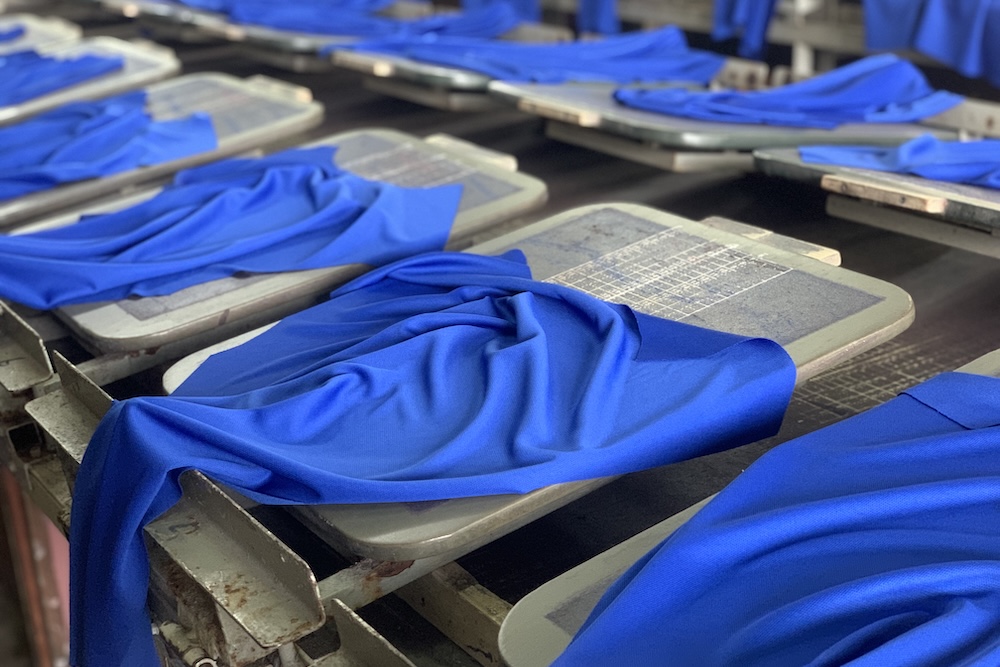
1. A T-Shirt
- Takes around 2,700 liters of water to produce — enough for one person to drink for two and a half years (WWF).
- Cotton farming accounts for 16% of all insecticide use worldwide.
- The majority of textiles are dyed with chemicals that contaminate rivers and groundwater.
2. A Pair of Jeans
- Produces approximately 30 kilograms of CO₂ in its life cycle (Levi’s).
- Requires 3,000+ liters of water to grow cotton and another 70 liters for a single wash during manufacturing.
- When washed at home, synthetic blends shed microfibers that pollute oceans — up to 500,000 tons of microplastics enter waterways annually from textiles.
3. A Smartphone
- Requires the mining of more than 30 metals, including cobalt, lithium, and gold — often under unsafe or exploitative labor conditions.
- Producing one device emits roughly 70 kilograms of CO₂ equivalent before it’s even turned on.
- The global mountain of e-waste exceeds 50 million metric tons annually — only 17% is properly recycled (Global E-Waste Monitor, 2023).
4. A Cup of Coffee
- Each cup carries a carbon footprint of 0.4 kilograms — about the same as charging a smartphone 55 times.
- Coffee production is responsible for 2.5 million hectares of deforestation globally.
- Disposable cups add 250 billion pieces of waste per year, most unrecyclable due to plastic lining.
5. A Hamburger
- Produces around 3 kilograms of CO₂ equivalent per serving, mainly from methane emissions.
- Beef accounts for 41% of livestock-related greenhouse gas emissions, despite providing less than 20% of dietary protein.
- Each burger represents roughly 660 gallons of water (University of California).
These numbers don’t exist to shame — they exist to reveal. Because when we understand the story behind the stuff, we can begin to change it.
Out of Sight, Still Here
Once something leaves our hands, we imagine it disappears. But waste never disappears — it just relocates.
- 91% of plastic waste ever produced has never been recycled (OECD, 2022).
- Roughly 40% of e-waste from rich countries is exported to developing regions, often handled without safety measures.
- Landfills release methane, a greenhouse gas 84 times more potent than CO₂ over 20 years.
The convenience of throwing something “away” is built on the illusion that there is an “away.”
In reality, there’s only somewhere else.
The Cost of Distance
Modern supply chains stretch across thousands of miles, involving dozens of factories and countless workers. This complexity hides accountability.
The shirt made in Bangladesh, the phone assembled in China, the packaging designed in Europe — they all converge into one system built for scale, not sustainability.
Each shipment, flight, and cargo container adds carbon.
Each middleman adds opacity.
By the time something arrives on a store shelf, the human and ecological cost has been abstracted into a barcode.
Seeing the Invisible
Life cycle assessments (LCAs) — tools used by sustainability researchers — help us see what we’ve learned to overlook.
They show that the majority of emissions and energy use occur before the product even reaches us.
That means our power as consumers lies in the choice of origin, not just the act of disposal.
To See More Clearly:
- Research product footprints. Choose companies that publish full transparency reports.
- Buy fewer, better things. Durability is the antidote to waste.
- Think in terms of total impact. How far did it travel? What materials were used? What happens next?
- Extend life. Repair, reuse, and repurpose before replacing.
Consciousness isn’t about perfection — it’s about perception.
Once you start seeing the invisible, you can’t unsee it.
Final Thoughts
Every object in your home is a story of transformation — from raw material to product to waste.
The question is not whether that transformation happens, but who it helps or harms along the way.
Consumption becomes conscious when we connect those dots — when we remember that our comfort and convenience are powered by real resources, real people, and real places.
When we start seeing the hidden footprints beneath everything we buy, we begin to walk lighter.