






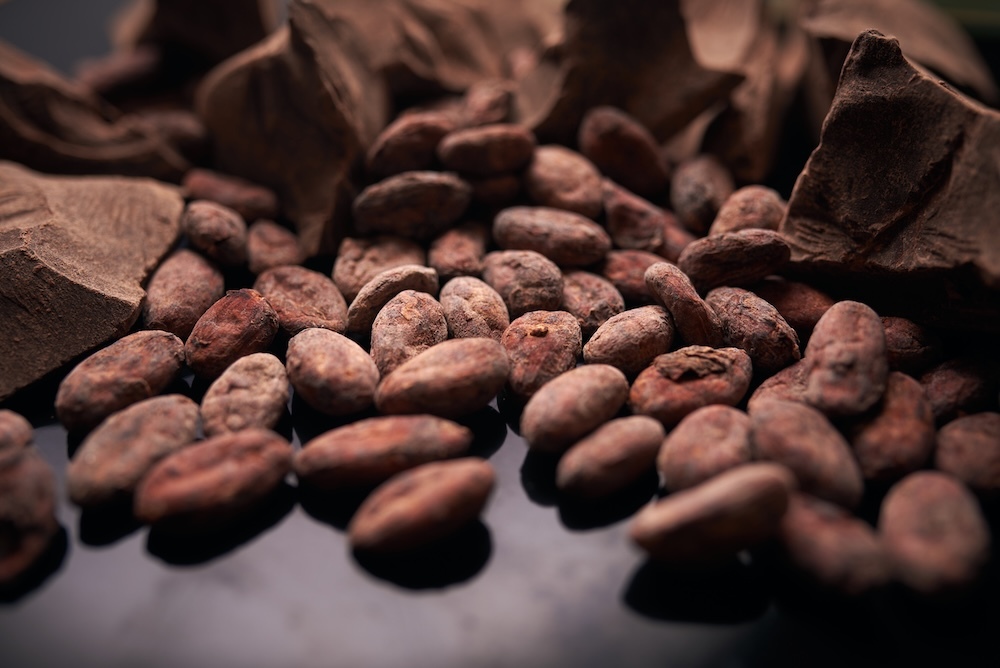
Chocolate is a universal “care” language: a small treat, a holiday ritual, a comfort gift when you don’t know what else to say. But cocoa has a hidden second story — one that runs through manual labor, forest loss, climate impact, and a surprising amount of waste before a single square reaches your hand.
This isn’t a guilt trip. It’s a clarity post.
Because if love and comfort are the message, we don’t want harm and disposability doing the loudest talking in the background.
Cocoa Is Labor-Intensive by Design
Cocoa isn’t a push-button crop. For many farms, it’s hands-on work across the entire chain:
- harvesting pods at the right ripeness
- opening pods and removing wet beans
- fermenting for flavor development
- drying to stabilize quality
- bagging and transporting through multiple middle steps before export
In other words: cocoa becomes “chocolate” through a lot of human time — often on smallholder farms, where income can be fragile and bargaining power is limited. That labor intensity matters because it’s one reason cocoa is vulnerable to exploitation when prices are low and poverty is high.
The Human Cost Risk Inside Cheap Chocolate
When people say “ethical chocolate,” they often mean the absence of harm. The difficult truth is that cocoa supply chains — especially in major producing regions of West Africa — have long been associated with serious human-rights risks, including child labor. One widely cited field research effort estimated that over 1.5 million children were involved in cocoa production in Côte d’Ivoire and Ghana during the 2018–2019 period (with a substantial portion engaged in hazardous work).
That number isn’t here to shock you. It’s here to anchor a simple idea:
If a box is cheap, someone else may be paying the real price.
What “more ethical” cocoa needs to show
Ethical cocoa can’t just be a vibe or a heart-shaped label. It should look like evidence:
- Traceability that goes beyond marketing copy
Look for specifics — sourcing regions, cooperatives, and public reporting that can be checked. - A plan for the root driver: poverty
Child labor risk is strongly tied to household income instability. Brands that take this seriously talk about income progress, remediation systems, and long-term investment — not just audits. - Third-party standards as one signal, not a moral guarantee
Certifications can help, but none “solves” the supply chain by itself. Treat them like a starting filter, not a final verdict. - Transparency about limits
Trustworthy brands acknowledge what they don’t know yet, instead of claiming the system is already “clean.”
Cocoa’s Environmental Footprint Is Not Just About Carbon
Cocoa is often grown in biodiversity-rich regions. When production expands into forests, the damage isn’t abstract: it’s habitat loss, fragmented ecosystems, soil degradation, and changes in local water cycles.
Recent research mapping cocoa plantations in Côte d’Ivoire and Ghana suggests cocoa cultivation has been an underlying driver of a meaningful share of forest loss — including in protected areas. That matters because forests are not replaceable “land.” They are climate stability, water regulation, and living systems.
Shade-grown and agroforestry aren’t “nice extras”
Cocoa can be grown in ways that retain more tree cover and ecosystem function — but those approaches require support, incentives, and enforcement. Otherwise, the market’s “cheap cocoa” demand keeps pulling in the opposite direction.
The Carbon Footprint of Chocolate Can Be Shockingly High
Chocolate’s climate footprint varies a lot based on land-use change, farming practices, energy used in processing, and transport. But the big lever is often deforestation and land conversion — the emissions you don’t see in a wrapper.
Some widely cited food-footprint datasets estimate dark chocolate’s emissions at levels that rival or exceed many animal-based foods per kilogram, largely because of land use impacts. Other life-cycle studies report lower numbers depending on what boundaries they include. The point isn’t a single perfect number.
The point is this:
If cocoa expansion costs forests, chocolate can become carbon-expensive in a way that’s invisible at checkout.
The Waste Story: Cocoa Produces More “Leftovers” Than Most People Realize
When you picture cocoa waste, you might think wrappers. But the first waste problem happens on the farm.
A cocoa pod is mostly not beans. Large portions of the fruit — husks, pulp, shells — are byproducts. Some research and sector analyses describe cocoa production as generating substantial organic residues, with big opportunities for “valorization” (turning byproducts into useful products) rather than leaving them to rot unmanaged.
Why on-farm waste matters
When organic byproducts are discarded without planning, they can:
- contribute to methane emissions as they decompose in certain conditions
- attract pests and disease pressure near crops
- represent lost value that could have supported farmer income through circular uses (soil amendments, biochar, materials, energy inputs, etc.)
A circular economy lens here is simple: if the system only values the bean and treats everything else as “trash,” it’s structurally inefficient — and that inefficiency shows up as both environmental burden and economic fragility.
Factory Waste and “Test Batch” Losses: What We Can Say Responsibly
You’re right to suspect there’s waste inside manufacturing — especially in product development, seasonal shapes, rejected batches, and line changeovers. The problem is that public, cocoa-specific factory waste data is limited.
What is well-supported is broader manufacturing reality:
- Food manufacturing generates meaningful “surplus food” and waste.
- Losses happen during changeovers, off-spec runs, quality rejections, and overproduction.
- Many facilities invest in process optimization and recovery systems because wasted product is wasted money.
So in this post, we don’t claim “X% of chocolate becomes waste” unless we have a high-quality source. Instead, we explain the common hotspots and what circular manufacturing looks like:
The waste hotspots (general, but real)
- Changeovers (switching flavors, fillings, molds, seasonal packaging)
- Off-spec product (texture, bloom, shape, weight, allergen controls)
- Overproduction (seasonal demand forecasting misses)
- Packaging rejects (misprints, damaged cartons, mixed-material components)
What circular manufacturing aims to do
- prevent waste at the source (better forecasting, tighter process control)
- recover edible surplus safely where regulations allow
- upcycle byproducts into new products when appropriate
- redesign packaging to reduce material complexity and improve real recovery
Packaging: The Most Visible Waste, and the Easiest Place to Improve
For most consumers, the waste you actually touch is packaging:
- multilayer films
- plastic trays
- foils + paper combinations
- glossy coatings
- decorative inserts that look recyclable but aren’t in real systems
Even when a package says “recyclable,” the real question is: recyclable where you live, with the equipment your local system actually uses?
The “less-waste” chocolate rule that works in real life
Choose chocolate that is:
- minimal packaging
- mono-material when possible (simpler paper-based formats)
- clearly labeled without vague green claims
- not built around disposability as the product experience
What to Do Instead: Cocoa Without the Harm Aesthetic
This is where UberArtisan’s voice matters: we don’t do perfection theater. We do practical, honest reduction of harm.
1) Buy less chocolate, but buy it better
Smaller quantity can mean:
- fewer wrappers
- less “gift packaging” waste
- more budget room for credible sourcing signals
2) Treat “ethical” as a spectrum you can move along
Look for:
- traceability details (not just “responsibly sourced”)
- public reporting
- credible standards (as one signal)
- brands that talk about income progress and remediation, not just audits
3) Skip the “cute trash”
The heart box, plastic tray, ribbon, and glitter tag are not romance. They’re landfill staging.
If it isn’t reusable, don’t let it be the centerpiece.
4) Create a circular ritual
- put chocolate in a container you’ll keep
- choose packaging you can actually recycle locally
- pair it with something that doesn’t become clutter: a note, a walk, a meal, a real conversation
Connection is the point. Cocoa is just one way to express it.
What’s Changed
Two things have intensified in the cocoa conversation:
- Deforestation scrutiny is getting more serious
New and evolving regulations are increasingly pushing companies toward deforestation-free supply chains, backed by traceability requirements. Implementation timelines have shifted, but the direction is clear: “we don’t know where this came from” is becoming less acceptable. - The waste conversation is moving upstream
The future isn’t “recycle harder.” It’s:
- reduce unnecessary packaging
- build systems that use more of the cocoa fruit
- prevent manufacturing losses and redesign processes to avoid surplus
Circular economy thinking is no longer niche — it’s becoming the only approach that scales without breaking ecosystems.
FAQs
Is cocoa farming really labor-intensive?
Yes. Cocoa generally requires hands-on harvesting and careful post-harvest steps (fermentation and drying) to produce usable beans, often on smallholder farms.
Does buying cheap chocolate cause child labor?
No single purchase “causes” it, but low prices and weak safeguards can increase risk in supply chains. Credible research has documented child labor in cocoa-growing regions, which is why traceability and income solutions matter.
Is chocolate bad for the climate?
It can be climate-intensive, especially when associated with land-use change and deforestation. Emissions vary widely by sourcing and production practices.
Is there a lot of waste in cocoa?
Yes — especially organic byproducts at the farm level (husks/shells/pulp) and surplus/waste across manufacturing and seasonal supply chains. Cocoa has major opportunities for circular use of byproducts.
What’s the simplest “better” choice?
Buy less, choose minimal packaging, and prioritize brands that provide real sourcing detail and public accountability.
Final Thoughts
Cocoa can be a symbol of care — but it shouldn’t be built on hidden harm and quiet waste.
The less-sweet side of cocoa isn’t a reason to give up chocolate. It’s a reason to make it truer: fewer disposable rituals, more transparent sourcing, and choices that keep forests standing and people safer.
Small shifts create ripples that grow into waves.